
 Alerts Overview
Alerts are one of several notification and automation capabilities available in GermainUX. They notify selected recipients when an SLA is breached or another configured condition requires attention.
See Notification Types for other available notification mechanisms.
⚙️ Create or Edit an Alert
Go to:
Germain Workspace -> Left Menu → Settings → Automation -> Alerts
From the Alerts screen, you can create, update, enable, disable, or review alert actions.
Most configuration fields include tooltips explaining their purpose and expected values.
📡 Local or Remote Execution
An alert can be executed:
|
Mode |
Description |
|---|---|
|
Local |
The alert is executed by Germain Enterprise. |
|
Remote |
The alert is executed through a selected GermainUX Engine, allowing the action to run from a specific server or environment. |
Use remote execution when the alert must access resources, networks, scripts, or services available only from a particular monitored environment.
🔔 Trigger an Alert from an SLA
An alert can be assigned to an SLA from either the KPI or SLA configuration.
Go to:
-
Germain Workspace -> Left Menu → Settings → Analytics -> KPIs
-
Germain Workspace -> Left Menu → Settings → Analytics -> SLAs
Then:
-
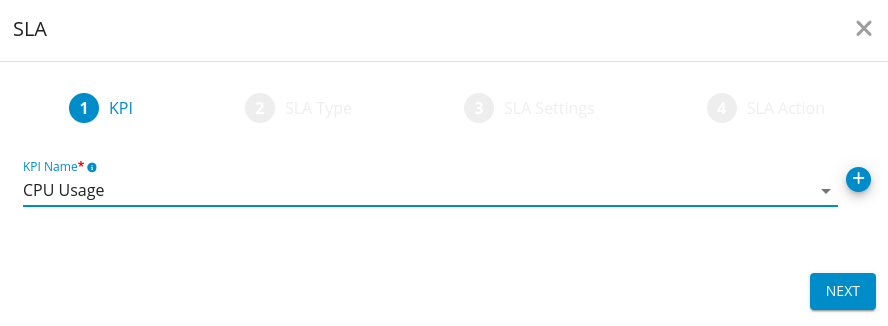
Select or create the KPI.
-
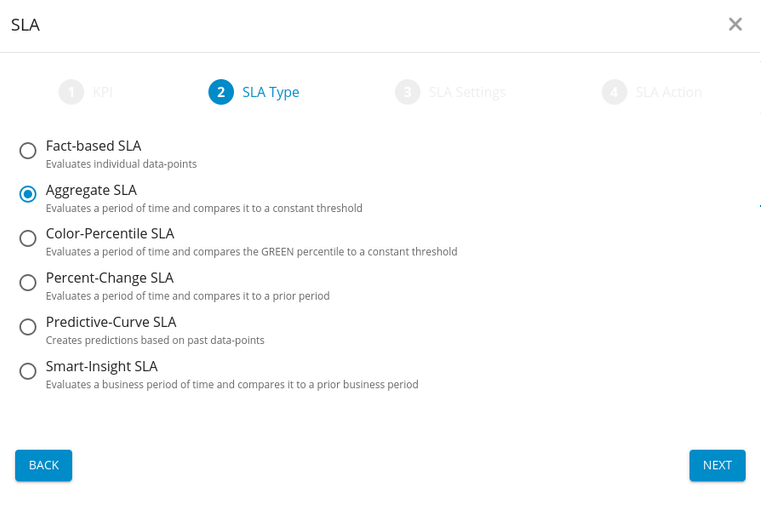
Select or create the SLA.
-
Configure the SLA condition, evaluation period, and measure.
-
Select an alert template.
-
Select the Alert Action.
-
Save the configuration.
When the SLA is breached and its activation requirements are satisfied, GermainUX executes the Alert Action.
⏳ SLA Evaluation Example
Assume an SLA is configured with:
-
Period Count:
5 -
Granularity:
Minutes -
KPI Measure: Average CPU Usage
GermainUX evaluates the average CPU usage recorded during the previous five minutes.
Other examples include:
-
A period count of
2with a granularity ofDaysevaluates the previous two days. -
A period count of
30with a granularity ofMinutesevaluates the previous 30 minutes.
📃 Alert Templates
Alert templates define the message delivered to recipients. Templates can contain KPI, SLA, application, system, user, error, and other contextual information.
The preview capability lets you review the rendered message while editing the template.
See Configure Alert and Report Templates.
🔗 Execute an Action from an Alert
An alert template can include a link that lets an authorized recipient execute a GermainUX action.
🔗 Action Link Without Additional References
<a href="${links.executeAction('Test Action')}"->
    Execute action: Test Action
</a->
🔗 Action Link with Additional References
<a href="${
    links.executeActionWithReferences('Test Action')
        .addConfigReference(
            'Server',
            'germain.apm.monitoringConfig.dataSources',
            'DS Name'
        )
        .addConfigReference(
            'Credentials',
            'germain.apm.monitoringConfig.credentials',
            'Example Credentials'
        )
        .addValueReference('Var1', 'Variable 1')
        .addValueReference('Var2', 'Variable 2')
        .build()
}"->
    Execute action: Test Action
</a->
The referenced values become available to the executed action as:
|
Reference |
Value |
|---|---|
|
|
|
|
|
|
|
|
|
|
|
|
References already defined on the ActionConfig object remain available automatically. Template links can add dynamic references required for a specific execution.
📋 Alert Configuration Reference
|
Workspace field |
Configuration key |
Description |
Values |
Default |
|---|---|---|---|---|
|
Name |
|
Unique name identifying the Alert Action. |
String |
— |
|
Distribution List |
|
Distribution List that receives the alert. |
Existing Distribution List name |
— |
|
Execute via Engine |
|
When enabled, allows an Engine or target server to execute the alert. |
Boolean or calculated field |
— |
|
Triggered by SLAs |
— |
SLAs currently configured to trigger this action. |
Calculated collection |
— |
|
Quiet Time Used |
|
Prevents the same alert from firing again during the quiet-time period after its first occurrence. |
|
|
|
Quiet Time Period |
|
Quiet-time duration in seconds. A value of |
Integer |
— |
|
Logging Enabled |
|
Enables execution logging for the alert. |
|
— |
|
Notify on Success |
|
Sends a notification when the action completes successfully. |
|
— |
|
Notify on Failure |
|
Sends a notification when the action fails. |
|
— |
|
Execution Count |
|
Maximum number of executions allowed during the configured interval. |
Integer |
— |
|
Execution Interval |
|
Time interval over which the execution limit applies. |
|
— |
|
Number of Retries |
|
Number of retry attempts after a delivery failure. |
Integer |
|
See Quiet Time for additional configuration details.
✂️ Reduce Alert Volume
GermainUX provides two primary mechanisms for limiting repetitive alerts.
🔇 Quiet Time
Quiet Time is configured on the Alert Action.
After the alert fires, GermainUX suppresses additional executions of that alert during the configured quiet-time period.
Use Quiet Time when repeated SLA violations would otherwise generate multiple notifications for the same ongoing issue.
🔢 Activation Count
Activation Count is configured on the SLA.
The SLA Action is triggered only after the configured number of violations has occurred.
For example, an Activation Count of 3 requires three qualifying violations before the alert is sent.
Go to:
Germain Workspace → Left Menu → Settings --> Analytics --> SLAs
Quiet Time limits repeated notifications after an alert fires, while Activation Count prevents an alert from firing until the required number of violations has been reached.
ℹ️ Get Help
The Germain Team can help you set this up. Contact GermainUX Support.
Service: Automation
Feature Availability: 2014.1 or later