
🤖 AI-Powered Sentiment and Response Quality Analysis
GermainUX can analyze sentiment and response quality in near real time across any conversation, feedback or text-based data collected from a preconfigured or custom data source.
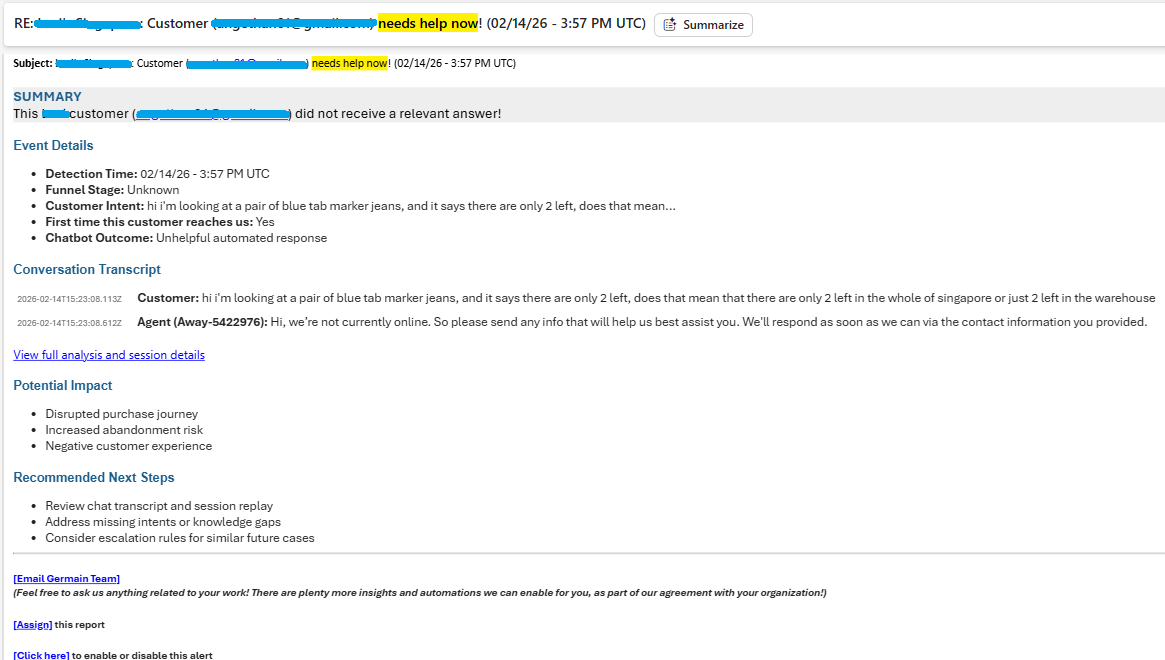
📥 Supported sources
GermainUX helps teams understand not only whether a customer is satisfied or frustrated, but also whether the interaction produced a useful outcome and requires follow-up.
🔍 What GermainUX Can Analyze
Depending on the configured AI prompt and data available, GermainUX can identify:
|
Signal |
|---|
|
Positive, neutral or negative sentiment |
|
Frustration, urgency or dissatisfaction |
|
Conversation topic or issue category |
|
Missing, incomplete or irrelevant answers |
|
Unanswered questions |
|
Customer intent |
|
Escalation risk |
|
Recommended priority |
|
Suggested follow-up action |
|
Trends across large volumes of feedback or conversations |
Sentiment indicates how the customer appears to feel. Response-quality analysis determines whether the question or request was adequately addressed. These signals are related, but they are not the same and can be configured independently.
 Detect Missing or Inadequate Answers
A customer may ask a chatbot or customer-service representative a question and receive:
|
Possible response |
|---|
|
No answer |
|
An incomplete answer |
|
An irrelevant response |
|
An answer that does not address the customer's intent |
|
Conflicting or inaccurate guidance |
|
A response that requires escalation |
GermainUX can analyze the conversation as it occurs and detect when the response appears inadequate.
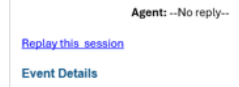
And because context is everything, GermainUX captures with millisecond precision what users see and do. You can replay the conversation—and what happened before it—to understand the full context and identify what could be improved.
When configured, GermainUX can then:
-
Identify the unanswered or partially answered question.
-
Summarize the problem.
-
Assess sentiment and urgency.
-
Assign a category and priority.
-
Alert the appropriate CX or support team.
-
Include the available customer and conversation context.
-
Trigger a follow-up or other automated workflow.
This helps teams recover a poor interaction before it becomes a complaint, lost sale, abandoned journey or customer-retention problem.
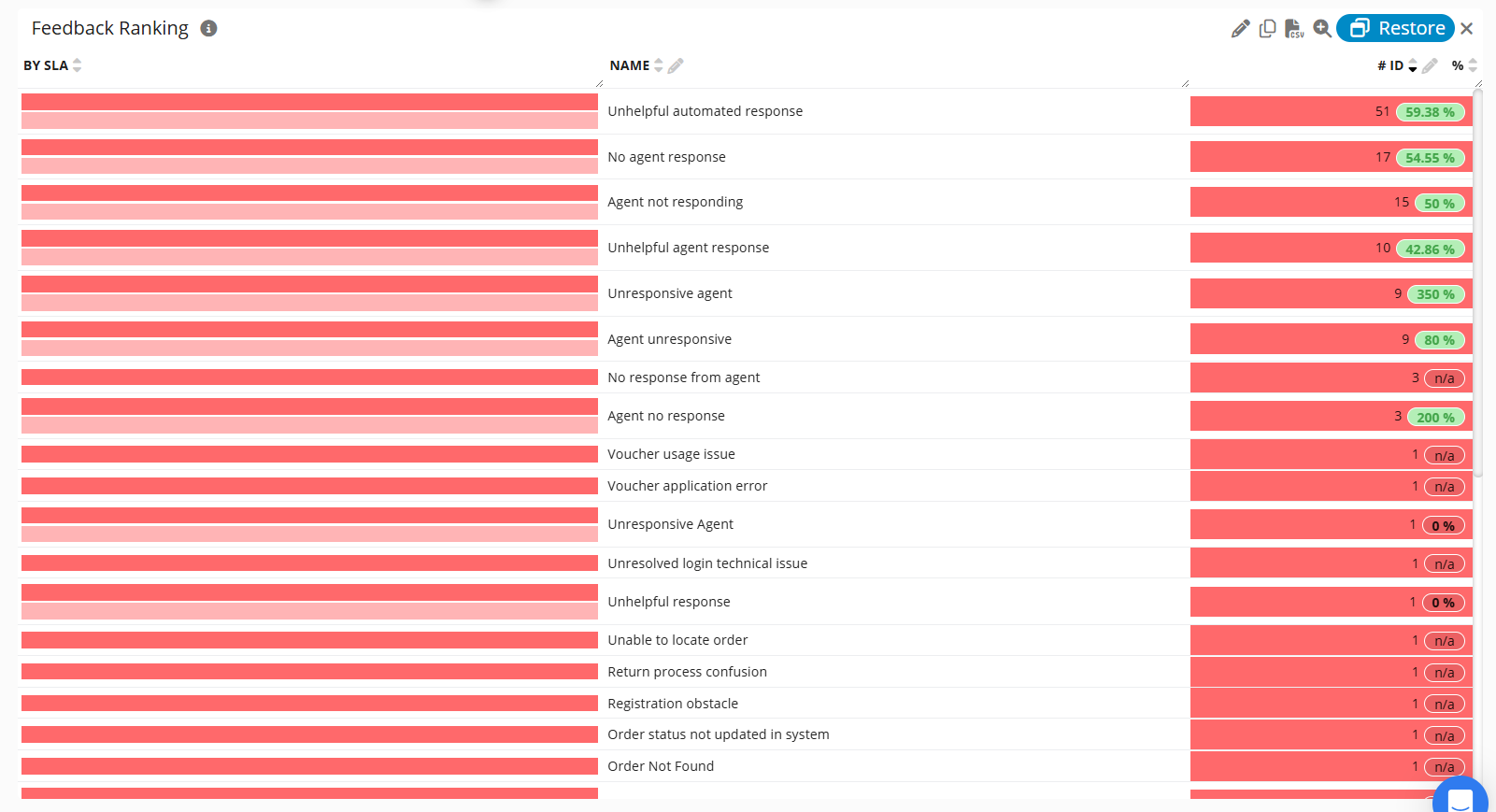
📈 Analyze and Prioritize Feedback at Scale
Organizations may receive thousands of comments through surveys, feedback forms, chatbot conversations and other channels. Reviewing and prioritizing them manually can be slow and inconsistent.
GermainUX can analyze each response and automatically assign:
|
Attribute |
|---|
|
Sentiment |
|
Topic or category |
|
Severity |
|
Urgency |
|
Business impact |
|
Recommended priority |
|
Suggested owner or next action |
Teams can then focus first on the feedback that is most urgent or most likely to affect customer satisfaction, conversion, retention or brand trust.
💡 Examples
For example, GermainUX can distinguish among:
|
Feedback |
Possible analysis |
|---|---|
|
“The new layout looks good.” |
Positive sentiment; low priority |
|
“I cannot complete payment.” |
Negative sentiment; conversion blocker; critical priority |
|
“Where can I download my invoice?” |
Neutral sentiment; billing topic; response required |
|
“Your chatbot keeps repeating the same answer.” |
Negative sentiment; ineffective chatbot conversation; high priority |
|
“I was charged twice and nobody responded.” |
Strong negative sentiment; billing and support failure; urgent escalation |
📧 Feedback Collection
Feedback can be collected through the GermainUX Feedback Popup or through an integrated third-party mechanism.
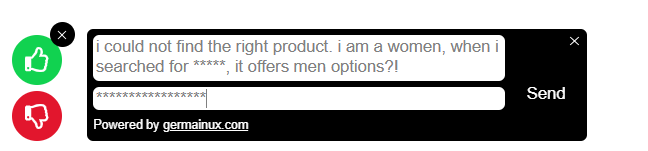
When feedback is connected with user-session and application data, teams can analyze it in context, including:
|
Context |
|---|
|
What the user was trying to accomplish |
|
Which page, product or workflow was involved |
|
What happened before the feedback was submitted |
|
Whether errors or performance problems occurred |
|
Whether the user completed or abandoned the journey |
|
Whether similar feedback affects other users |
Session Replay can provide additional evidence when the monitored channel and privacy configuration support it.
🔔 Real-Time Alerts and Follow-Up
GermainUX can trigger an alert or automated action when an analysis meets configured conditions.
Examples include:
-
Alert the CX team when a customer receives no useful answer.
-
Notify support when highly negative feedback concerns a blocking error.
-
Route billing complaints to the appropriate team.
-
Escalate conversations involving urgent language or repeated failed responses.
-
Create a follow-up task for a customer who abandoned after a poor interaction.
-
Produce a scheduled summary of the most common complaints and emerging issues.
Alerts can include the available customer, conversation, application and journey context required for follow-up. Access to personal or sensitive information remains subject to the organization's data-privacy configuration and permissions.
🌐 Analyze Trends at Scale
Individual alerts help recover specific interactions. Aggregate analytics help organizations improve the broader customer experience.
GermainUX can help teams understand:
|
Insight |
|---|
|
The most common topics generating negative sentiment |
|
Which chatbot intents produce inadequate answers |
|
Which products, pages or workflows generate the most complaints |
|
Whether sentiment improves or declines over time |
|
Which customer segments are most affected |
|
Which issues create the greatest conversion or retention risk |
|
Whether corrective changes improve subsequent conversations |
Results can be segmented using pivots such as channel, topic, product, application, page, customer segment, region, chatbot, representative or time period.
⚙️ Typical Workflow
-
Capture a conversation, comment, survey response or feedback event.
-
Analyze sentiment, intent and response quality.
-
Categorize the issue by topic and type.
-
Prioritize it according to urgency and business impact.
-
Correlate it with the user's session, journey, errors and application behavior.
-
Alert or route the issue to the appropriate team.
-
Follow up with the customer when necessary.
-
Track trends and confirm whether corrective actions improve outcomes.
🔧 Customize the Automated Analysis & Action
GermainUX can support custom:
|
Customizable item |
|---|
|
AI prompts |
|
Sentiment labels |
|
Topic and issue categories |
|
Response-quality criteria |
|
Priority and severity rules |
|
Channel-specific analysis |
|
Privacy, masking and data-retention requirements |
Human review should remain available for high-impact decisions, ambiguous conversations and cases in which tone or context may be misinterpreted.
📦 Additional Resources
-
AI Insights & Recommendations
-
More Analytics Features
-
More Automation Features
-
Management Features.
ℹ️ Get Help
The Germain Team can help you set this up. Contact GermainUX Support.
Service: Analytics
Feature Availability: 2022.1 or later