
⚙️ Configure Salesforce Omni-Channel Monitoring
GermainUX monitors Salesforce Omni-Channel through the Salesforce REST API.
It provides operational visibility into supported chat and Omni-Channel activity, helping teams analyze:
-
Work volume
-
Agent and queue activity
-
Routing and handling
-
Conversation performance
-
Errors and failed interactions
-
Trends over time
-
The relationship between Omni-Channel activity and the Salesforce user experience
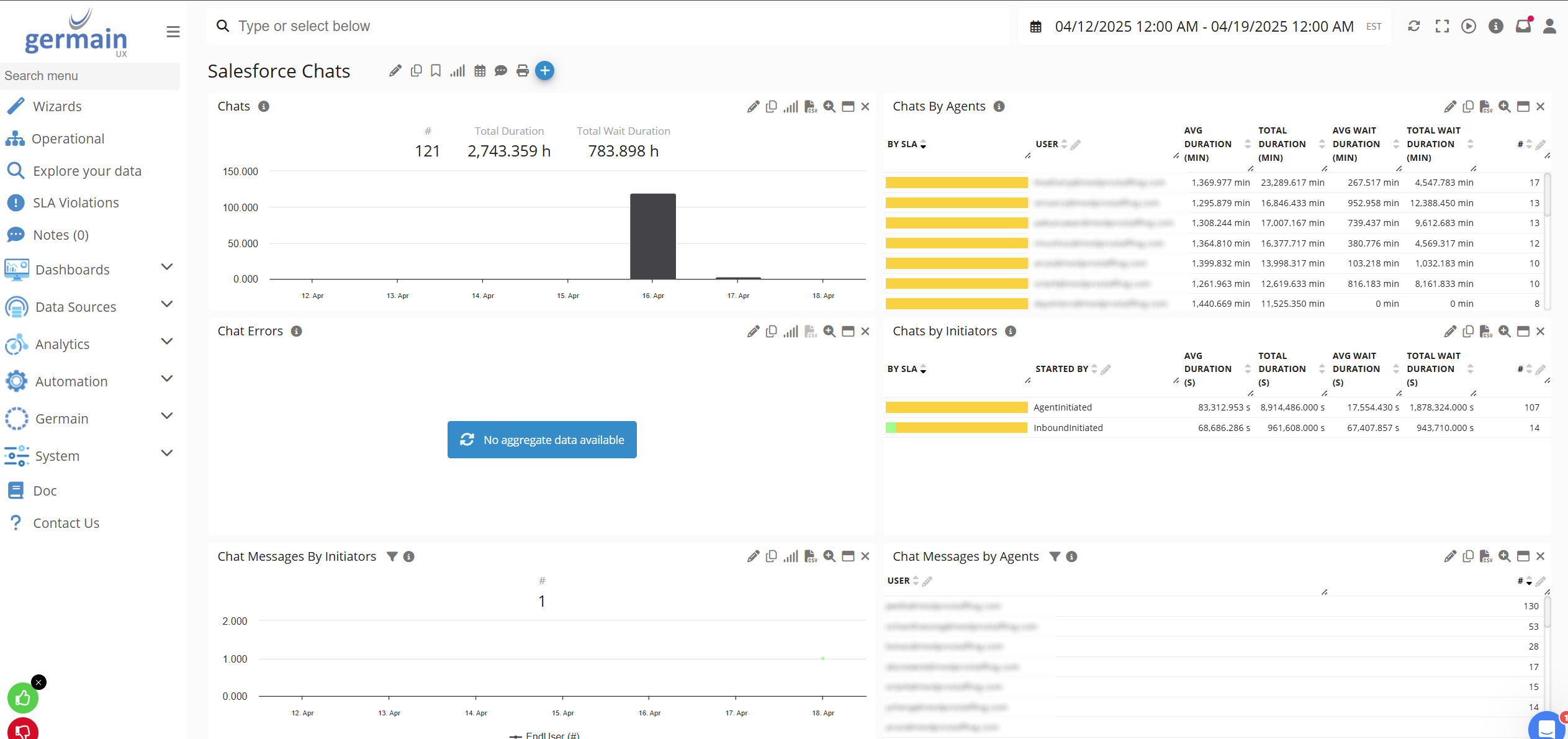
Omni-Channel Monitoring is performed by the GermainUX Engine and is enabled automatically through the Salesforce Application wizard.
🛠 How the Monitoring Works
The GermainUX Engine periodically retrieves available Omni-Channel and chat information through Salesforce REST APIs.
GermainUX then converts the collected information into KPIs that can be:
-
Displayed on dashboards
-
Filtered and segmented
-
Compared over time
-
Correlated with Salesforce user activity
-
Used in SLAs and alerts
-
Included in scheduled reports
-
Analyzed alongside Salesforce errors and Session Replay
The GermainUX component is currently identified internally as:
Salesforce Chat Monitor
Although the component name refers to chat, it supports the Salesforce Omni-Channel monitoring described on this page.
📑 Prerequisites
Before configuring Omni-Channel Monitoring, confirm that:
-
Salesforce Omni-Channel is configured and in use.
-
A GermainUX Engine is deployed and running.
-
Salesforce monitoring has been deployed through the Salesforce Application wizard.
-
The Salesforce OAuth connection is active.
-
The integration user can access the required Omni-Channel information through Salesforce REST APIs.
-
The Engine can reach the Salesforce API endpoints.
-
The organization has sufficient Salesforce API capacity for the selected interval.
-
GermainUX 2024.3 or later is installed.
For the initial integration, see Deploy GermainUX for Salesforce.
🔑 Required Salesforce Access
The dedicated Salesforce integration user must be able to access the Omni-Channel and chat data required by the configured monitor.
Use a dedicated account and grant only the necessary:
-
API access
-
Object permissions
-
Field permissions
-
Omni-Channel or chat visibility
-
Connected App access
If some queues, agents, or work items are missing, verify the integration user’s Salesforce access before changing the GermainUX configuration.
⏯️ Enable Omni-Channel Monitoring
Omni-Channel Monitoring is enabled automatically when Salesforce monitoring is deployed through the Salesforce Application wizard.
To configure it:
-
Open GermainUX Workspace.
-
Open the left navigation menu.
-
Select Wizards.
-
Select Salesforce Application.
-
Choose the GermainUX Engine that will run the monitor.
-
Enter the Salesforce connection and OAuth settings.
-
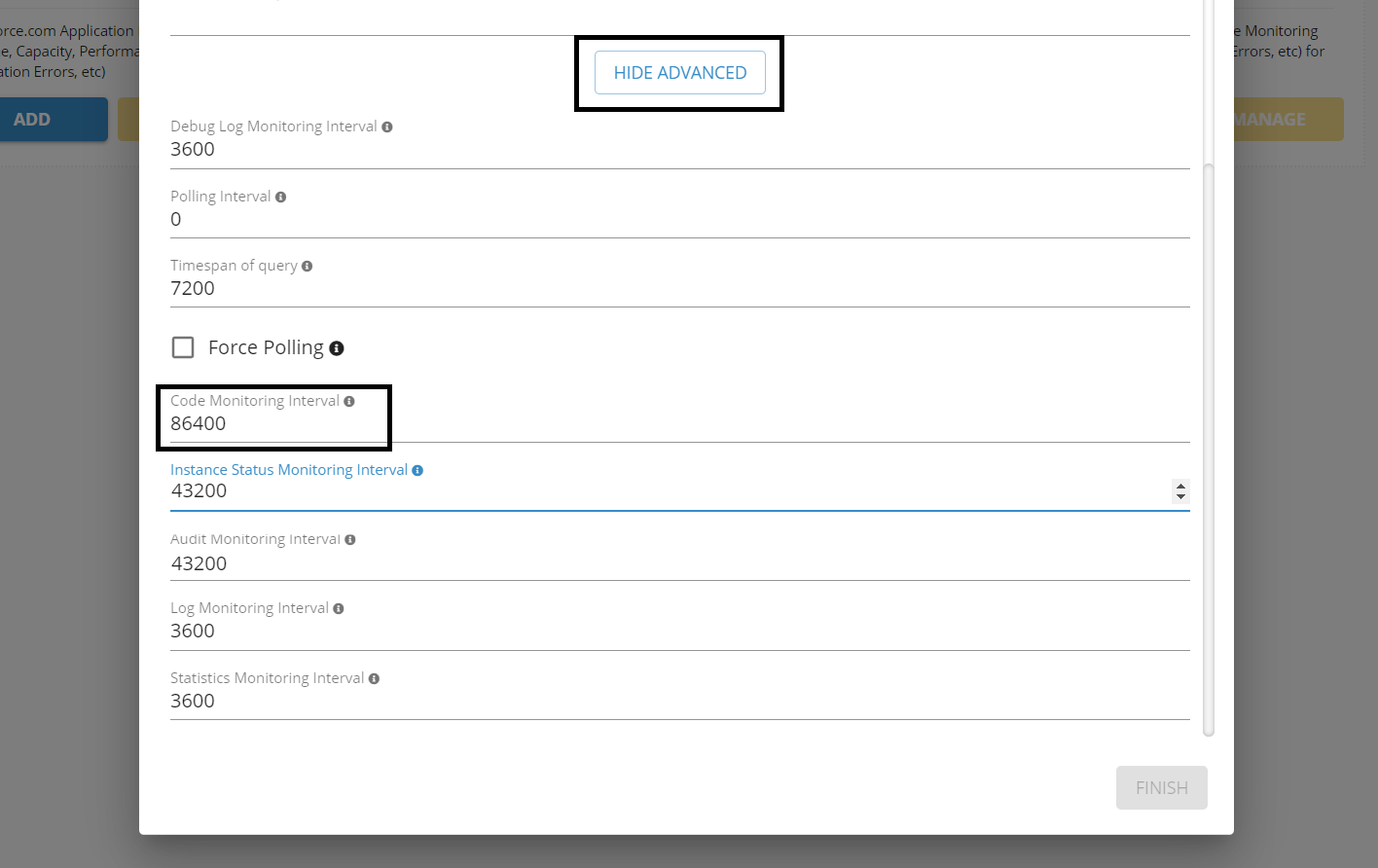
Expand Show Advanced.
-
Locate Chat Monitoring Interval.
-
Set the required execution frequency.
-
Complete the wizard.
The wizard creates a Salesforce Chat Monitor component.
🕒 Default Monitoring Frequency
By default, Omni-Channel Monitoring runs once per hour.
The appropriate interval depends on the purpose of the monitoring.
|
Objective |
Scheduling consideration |
|---|---|
|
Historical reporting and trend analysis |
The default hourly interval may be sufficient. |
|
Operational queue and workload visibility |
A shorter interval may be required. |
|
Rapid incident detection |
Configure a shorter interval and validate API consumption and source-data latency. |
|
Low-volume or noncritical environments |
A longer interval may be acceptable. |
This is scheduled API collection. An hourly schedule does not provide minute-by-minute operational visibility.
Before reducing the interval, consider:
-
Salesforce API consumption
-
Number of monitored organizations
-
Number of Omni-Channel records
-
GermainUX ingestion and storage
-
Required dashboard freshness
-
Alerting expectations
🔧 Configure the Frequency During Deployment
During the Salesforce Application wizard:
-
Select Show Advanced.
-
Locate:
Chat Monitoring Interval -
Enter the required frequency.
-
Complete the wizard.
🔁 Change the Frequency After Deployment
To modify an existing monitor:
-
Open GermainUX Workspace.
-
Open the left navigation menu.
-
Select Germain.
-
Open the State tab.
-
Search for:
Type Name = Salesforce Chat Monitor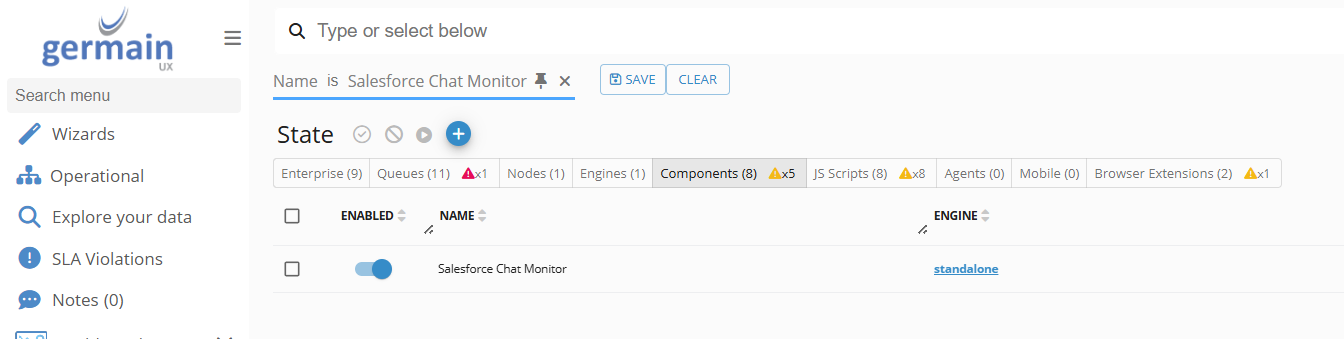
-
Select the component associated with the intended Salesforce organization.
-
Update Execution Schedule.
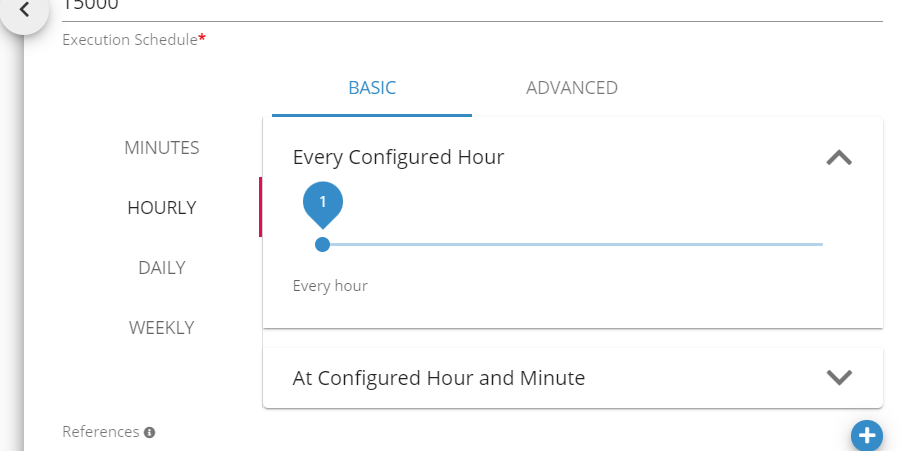
-
Save the change.
The new schedule applies to subsequent executions.
⛔ Disable Omni-Channel Monitoring
To stop ongoing collection:
-
Open GermainUX Workspace.
-
Open the left navigation menu.
-
Select Germain.
-
Open the State tab.
-
Search for:
Type Name = Salesforce Chat Monitor -
Locate the applicable monitor.
-
Turn off the toggle in the Enabled column.
-
Save the change if prompted.
Disabling the monitor stops future API collection. Previously collected data remains available according to the configured GermainUX retention policy.
▶️ Re-enable Monitoring
To resume collection:
-
Return to Germain → State.
-
Search for
Salesforce Chat Monitor. -
Turn on the Enabled toggle.
-
Confirm the execution schedule.
-
Save the configuration.
-
Allow the next scheduled execution to complete.
🔍 Available Monitoring Areas
The exact attributes depend on the Salesforce APIs, permissions, and Omni-Channel features enabled in the organization.
GermainUX can use the available information to analyze areas such as:
📊 Omni-Channel Overview
-
Overall activity
-
Volume over time
-
Active or completed work
-
Distribution by supported channel
-
Queue or routing context
-
Trends by organization or environment
👥 Agent and Work Handling
Where available, analyze:
-
Agent or user
-
Presence or availability status
-
Assigned work
-
Accepted or declined work
-
Work status
-
Handling duration
-
Capacity or workload indicators
📍 Queue and Routing
Where available, analyze:
-
Queue
-
Routing result
-
Waiting work
-
Assignment delay
-
Work distribution
-
Channel or service
-
Unhandled or unsuccessful routing
 Errors
Monitor errors affecting Omni-Channel or chat operations, such as:
-
API failures
-
Retrieval errors
-
Routing or assignment failures
-
Missing or invalid data
-
Salesforce-side errors
-
Integration failures
-
Monitored conversation errors
The precise data depends on what Salesforce exposes and what the integration user is permitted to retrieve.
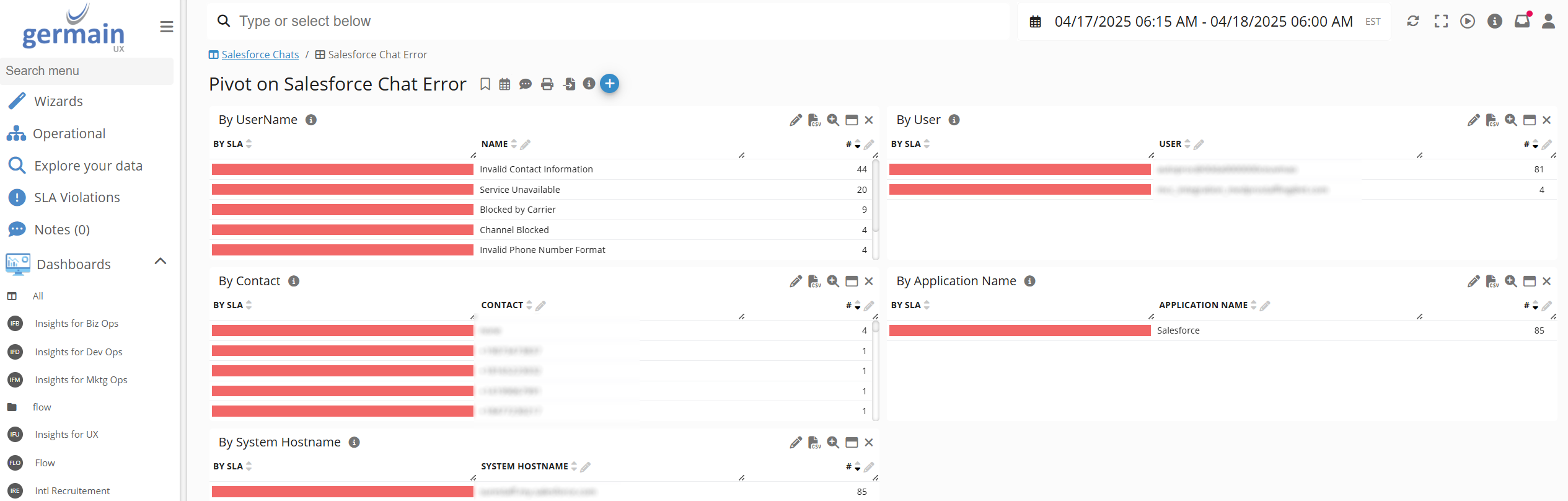
📋 Omni-Channel KPIs
See Chat and CTI Monitoring KPIs.
Applicable KPIs, measures, and pivots can help analyze:
-
Volume
-
Duration
-
Errors
-
Users or agents
-
Queues
-
Channels
-
Status
-
Work distribution
-
Trends
🖥️ View the Dashboard
Open:
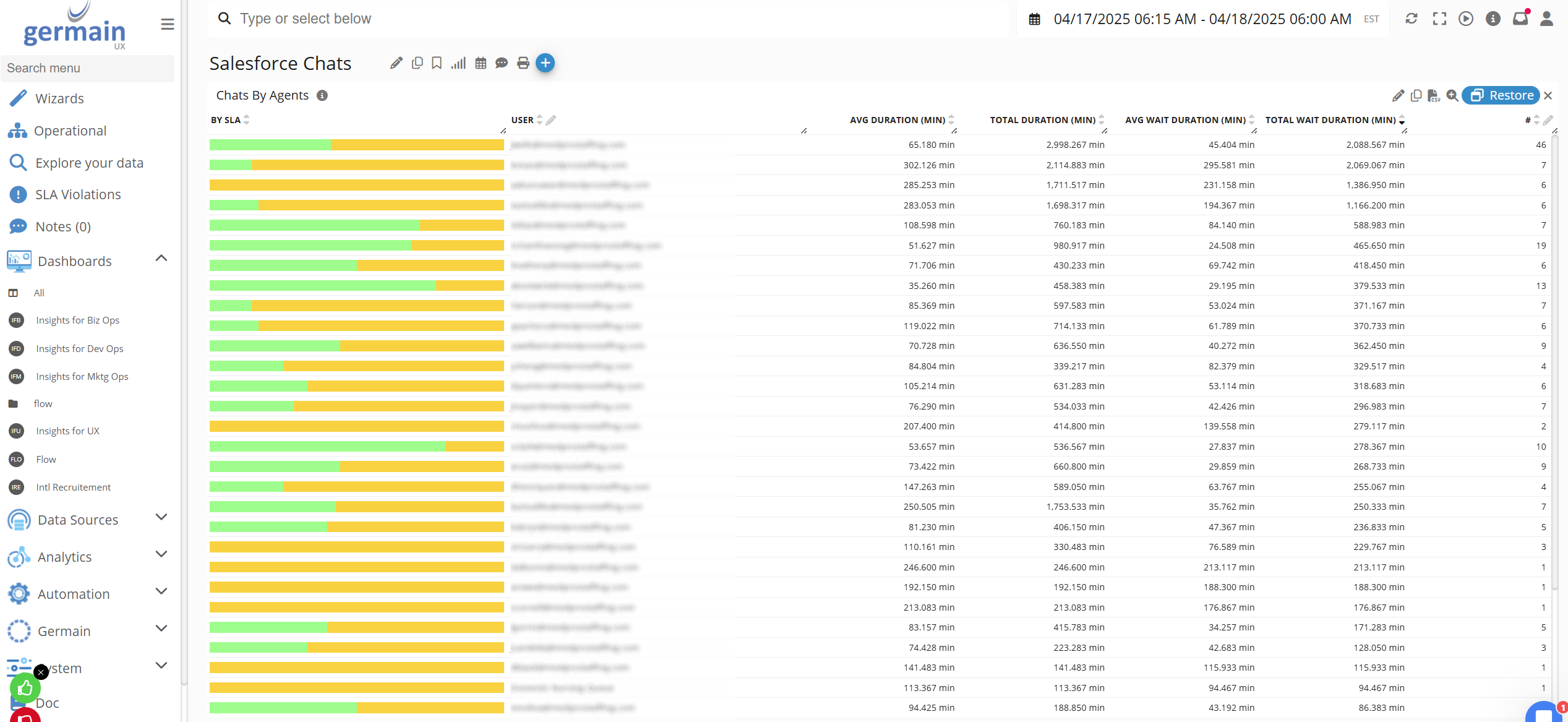
Dashboards → IT → Application → Salesforce → Salesforce Chat
The dashboard can provide views for:
-
Salesforce Omni-Channel overview
-
Omni-Channel activity
-
Errors
-
Trends and breakdowns
-
Individual monitored instances
Select a KPI or chart to drill through to the underlying data and related analysis.
💡 Recommended Dashboard Measures
Depending on the collected facts, useful measures may include:
-
Count
-
Unique agents or users
-
Unique work items
-
Average duration
-
Percentile duration
-
Maximum duration
-
Error count
-
Error rate
-
Total workload
-
Completed or unsuccessful work
🧭 Recommended Pivots
Useful dimensions may include:
-
Salesforce organization
-
Environment
-
Channel
-
Queue
-
Agent
-
Work status
-
Routing status
-
Error
-
Time period
-
Work item type
Only use pivots available in the collected Salesforce data.
🔔 Configure Alerts
Create alerts for actionable operational conditions, such as:
-
Omni-Channel data collection fails.
-
No new data arrives within the expected period.
-
Error volume exceeds a threshold.
-
Work volume changes unexpectedly.
-
Assignment or handling duration exceeds an SLA.
-
Unsuccessful or unhandled work increases.
-
A critical queue or channel becomes inactive.
-
A new error category appears.
Alerts can notify:
-
Contact-center operations
-
Salesforce administrators
-
Application owners
-
Service-desk teams
-
Integration support teams
Use thresholds, trends, and sustained conditions to avoid unnecessary alerts caused by normal short-term variation.
🔗 Correlate Omni-Channel Data With User Experience
Engine-based Omni-Channel Monitoring shows the operational records available through Salesforce APIs.
The RUM Extension adds the Salesforce user’s experience, including:
-
User interactions
-
Navigation
-
Browser errors
-
Failed requests
-
Slow page or component behavior
-
Session Replay
Together, these sources can help determine:
-
Whether agents could access and use Omni-Channel
-
What the agent saw when work was offered
-
Whether an accept or decline action succeeded
-
Whether the Salesforce UI froze or returned an error
-
Whether delays originated in the UI, Salesforce, or an integration
-
Which users and workflows were affected
✅ Validate Omni-Channel Monitoring
After deployment:
-
Confirm that
Salesforce Chat Monitoris enabled. -
Confirm that its latest execution completed successfully.
-
Verify the next execution time.
-
Generate or locate known Omni-Channel activity.
-
Wait for the next collection.
-
Open the Salesforce Chat dashboard.
-
Confirm that expected activity appears.
-
Verify the Salesforce organization and environment.
-
Confirm timestamps, channels, queues, agents, and statuses where applicable.
-
Confirm that known errors appear in the error view.
-
Test applicable alerts.
❓ No Omni-Channel Data Appears
If the monitor executes but no data appears:
-
Confirm that Salesforce Omni-Channel is enabled and active.
-
Verify that relevant activity occurred during the selected period.
-
Confirm the Salesforce OAuth connection.
-
Verify the integration user’s API and data permissions.
-
Check that
Salesforce Chat Monitoris enabled. -
Review its last execution and next scheduled execution.
-
Confirm that the GermainUX Engine is running.
-
Check connectivity from the Engine to Salesforce.
-
Review Engine logs for authentication, authorization, API, and parsing errors.
-
Review Salesforce API usage and limits.
-
Check the dashboard time range, organization, and environment filters.
🔎 Some Agents, Queues, or Work Items Are Missing
If only part of the expected data appears:
-
Verify the integration user’s object and record access.
-
Review field-level permissions.
-
Confirm that the missing records are exposed through the monitored Salesforce API.
-
Check whether the records fall outside the selected time range.
-
Confirm that the monitor supports the applicable Omni-Channel feature or channel.
-
Review filters and dashboard pivots.
-
Compare the API data with the Salesforce Omni-Channel interface.
⌛ Data Is Delayed
If the dashboard does not update quickly enough:
-
Review the monitor’s Execution Schedule.
-
Confirm that recent executions completed successfully.
-
Reduce the interval if faster visibility is required.
-
Monitor the effect on Salesforce API usage.
-
Confirm the latency of the underlying Salesforce data.
-
Set alert expectations according to the actual collection frequency.
🛡️ Security and Privacy
Omni-Channel information can contain sensitive operational or personal data, including:
-
Agent identities
-
Customer identifiers
-
Work-item identifiers
-
Queue assignments
-
Conversation metadata
-
Error details
-
Activity timestamps
Before production use:
-
Use a dedicated least-privilege integration account.
-
Restrict access to dashboards and detailed records.
-
Apply masking, anonymization, and exclusions.
-
Avoid collecting conversation content unless required and approved.
-
Configure appropriate retention.
-
Review access with Salesforce, contact-center, security, and privacy owners.
📚 Related Documentation
-
Other Analytics Features
-
Other Automation Features
ℹ️ Get Help
The Germain Team can help you set this up. Contact GermainUX Support.
Component: Engine, Mobile App, RPA Bot Recorder, RUM Ext
Feature Availability: 2017.1 or later