
📁 Import and Export HAR Files
An HTTP Archive—or HAR—file is a JSON-formatted record of the HTTP and HTTPS requests exchanged between a browser and a web application. HAR files typically use the .har extension.
Importing a HAR file is one of the fastest ways to create a GermainUX synthetic HTTP scenario from an existing user journey.
A HAR-based scenario reproduces the journey at the HTTP protocol level. It does not reproduce browser rendering, clicks, JavaScript behavior, or visual interactions. Use a Click-based synthetic scenario when those browser-level behaviors must be tested.
ℹ️ About HAR Files
A HAR file can contain details such as:
|
Field |
|---|
|
Request URLs |
|
HTTP methods |
|
Request and response headers |
|
Query parameters |
|
Request payloads |
|
Response status codes |
|
Timing information |
|
Resource types |
|
Cookies and authentication data, when captured |
Most browser developer tools can export network activity as a HAR file.
⚙️ Create a HAR File from a Browser Session
Follow these steps to export a HAR file from a browser:
-
Open the target web application.
-
Open the browser’s developer tools.
-
Select the Network tab.
-
Confirm that network recording is enabled.
-
Clear any unrelated requests.
-
Perform the workflow you want GermainUX to reproduce.
-
Export the captured network activity as a
.harfile. -
Review and sanitize the file before importing it into GermainUX.
You can also export HTTP activity from a real user session monitored by GermainUX and use it as the starting point for a synthetic HTTP scenario.
📥 Import a HAR File into GermainUX
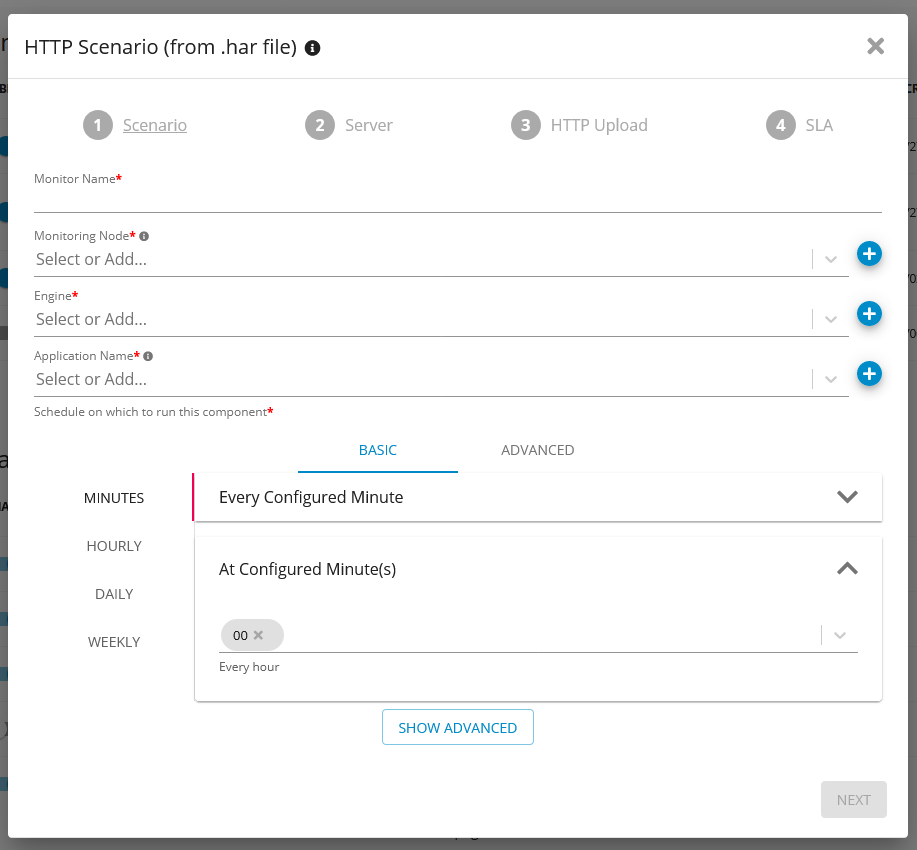
A HAR file can be imported to generate an executable HTTP scenario.
-
Open the GermainUX HTTP configuration page.
-
Select the Add icon above HTTP Scenarios.
-
Choose HTTP Scenario (from .har file).
-
Select where the scenario will execute, including the Monitoring Node and Engine.
-
Select Next.
-
Configure the protocol and target server.
-
Select the Import icon.
-
Choose the
.harfile. -
Review the number of HTTP requests generated from the file.
-
Remove requests that should not be included in the synthetic scenario.
-
Configure authentication, variables, validations, and request dependencies as required.
-
Optionally configure an SLA for the complete scenario.
-
Configure the execution schedule.
-
Finish the wizard to create and deploy the HTTP scenario.
After deployment, run the scenario manually once and confirm that:
|
Check |
|---|
|
Each request reaches the correct endpoint. |
|
Authentication works. |
|
Dynamic tokens and session values are handled correctly. |
|
Responses meet the expected conditions. |
|
The total duration and SLA are calculated correctly. |
📤 Export a HAR File from GermainUX
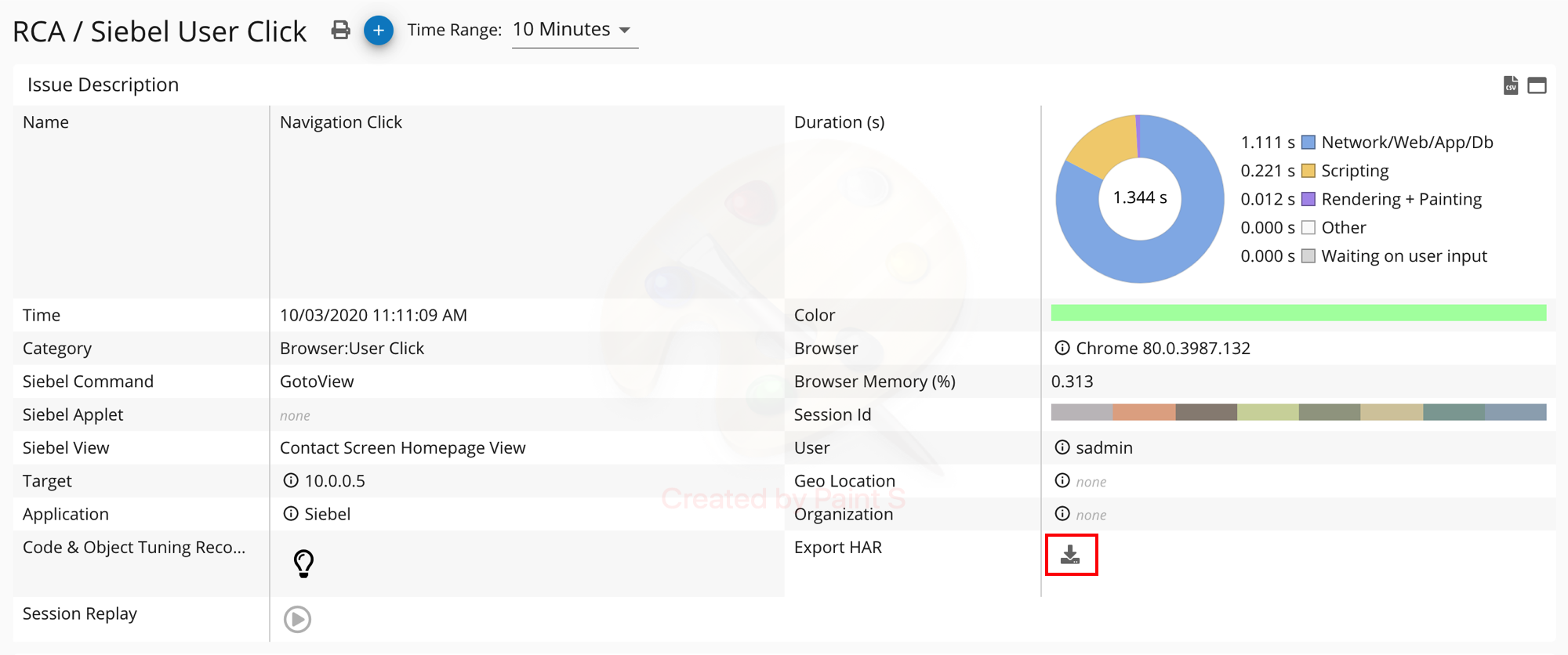
To export the HTTP and HTTPS requests captured during a monitored user session:
-
Open the applicable session or transaction in the GermainUX Analysis Dashboard.
-
Locate the network or issue-details section.
-
Select Export.
Export HAR - GermainUX -
Choose the HAR format.
-
Save the generated
.harfile.
The export contains the HTTP and HTTPS requests available for the selected session or analysis context.
🔒 Security Considerations
HAR files can contain sensitive information, including:
|
Sensitive data |
|---|
|
Cookies |
|
Authorization headers |
|
Session tokens |
|
Query-string values |
|
Form submissions |
|
API payloads |
|
Personal or business data |
Before sharing, storing, or importing a HAR file:
|
Action |
|---|
|
Remove credentials, tokens, and unnecessary cookies. |
|
Replace production secrets with secure GermainUX credential references. |
|
Restrict access to authorized users. |
|
Apply the organization’s retention and data-handling policies. |
|
Avoid committing HAR files containing sensitive data to source control. |
|
Confirm that the synthetic scenario targets an authorized environment. |
⚖️ HAR-Based vs. Click-Based Scenarios
|
Scenario type |
Best suited for |
|---|---|
|
HAR-Based HTTP Scenario |
APIs, HTTP transactions, service availability, response validation, and protocol-level workflows. |
|
Click-Based Synthetic Scenario |
Browser rendering, JavaScript, clicks, forms, multiple tabs, screenshots, and complete visual workflows. |
ℹ️ Get Help
The Germain Team can help you set this up. Contact GermainUX Support.
Component: Engine
Feature Availability: 2014.1 or later