
🚀 Deploy a Synthetic Scenario
A GermainUX synthetic scenario can be deployed to one web application or reused across thousands of applications and environments.
Choose the deployment method according to the required scale:
|
Deployment method |
Use when |
|---|---|
|
Wizard |
Deploying a recorded scenario to a specific component and Engine. |
|
Profile |
Standardizing and deploying similar scenarios across many applications or environments. |
🪄 Deploy with the Wizard
After recording or importing the scenario:
-
Go to GermainUX Workspace -> Left Menu → Settings → Wizards.
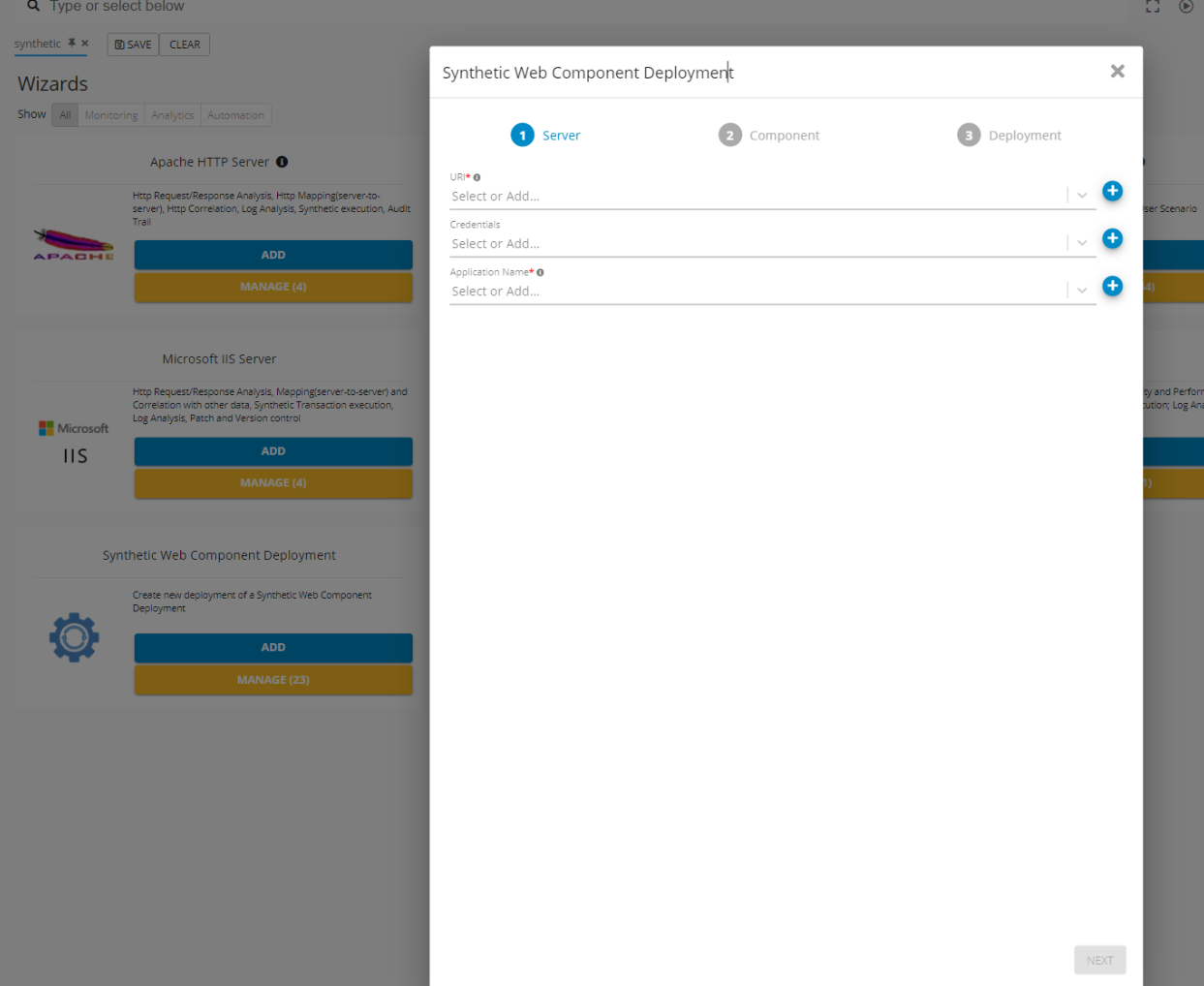
Synthetic Wizard - GermainUX -
Open Synthetic Web Component Deployment.
-
Select the synthetic scenario.
-
Configure the target application and browser.
-
Configure the WebDriver path when required.
-
Select the target component.
-
Select the GermainUX Engine that will execute the scenario.
-
Configure the execution schedule.
-
Review the settings and finish the deployment.
📦 Deploy within a Component
The Synthetic Web Component contains the scenario’s execution configuration, including:
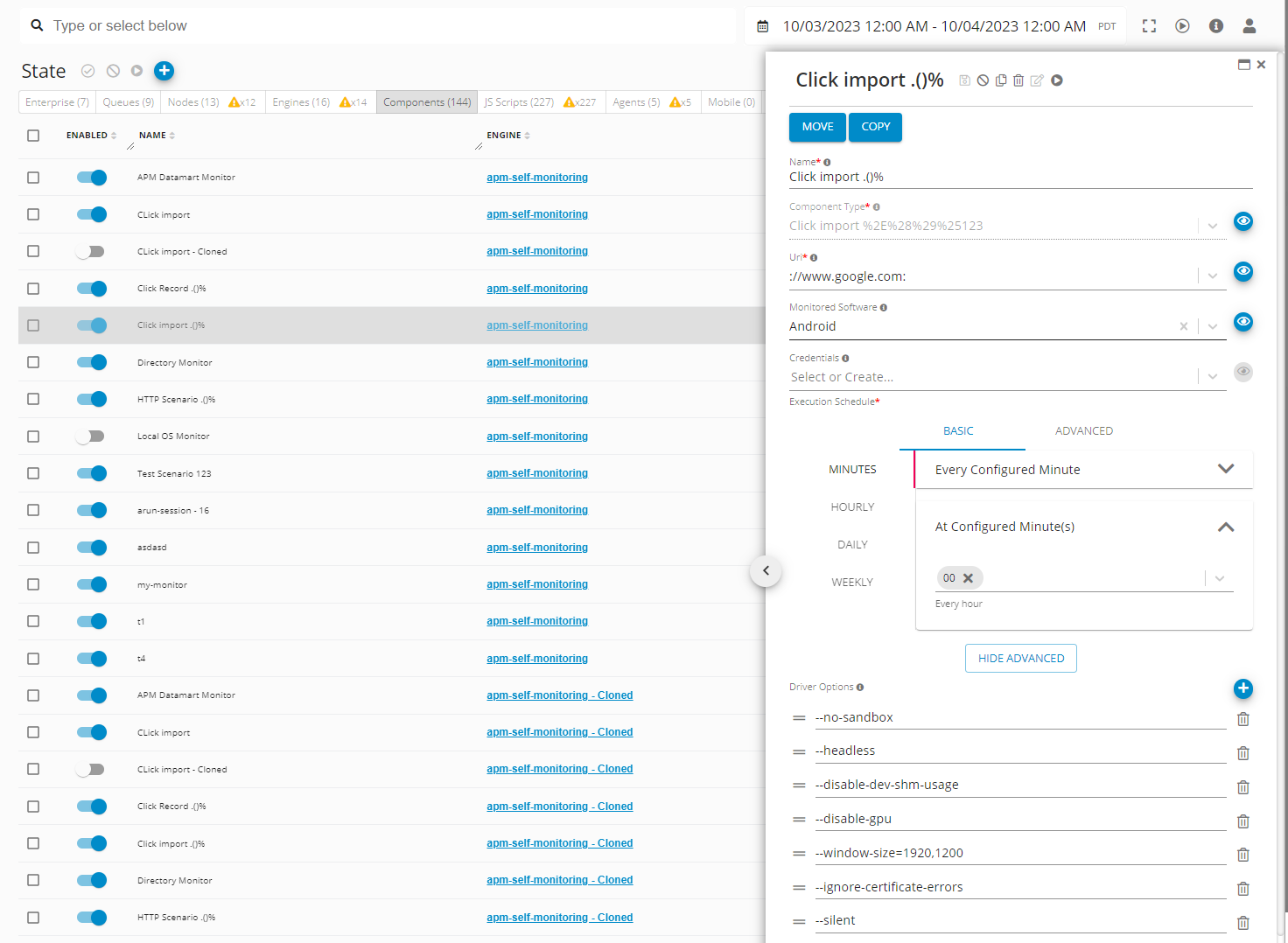
|
Configuration Item |
Details |
|---|---|
|
Scenario or script |
Scenario or script |
|
Target application |
Target application |
|
Browser |
Browser |
|
WebDriver |
WebDriver |
|
SLA threshold |
SLA threshold |
|
Schedule |
Schedule |
|
Runtime settings |
Runtime settings |
A component can be configured for a specific application, environment, location, or monitoring objective.
⚙️ Deploy within an Engine
The GermainUX Engine executes the deployed Synthetic Web Component.
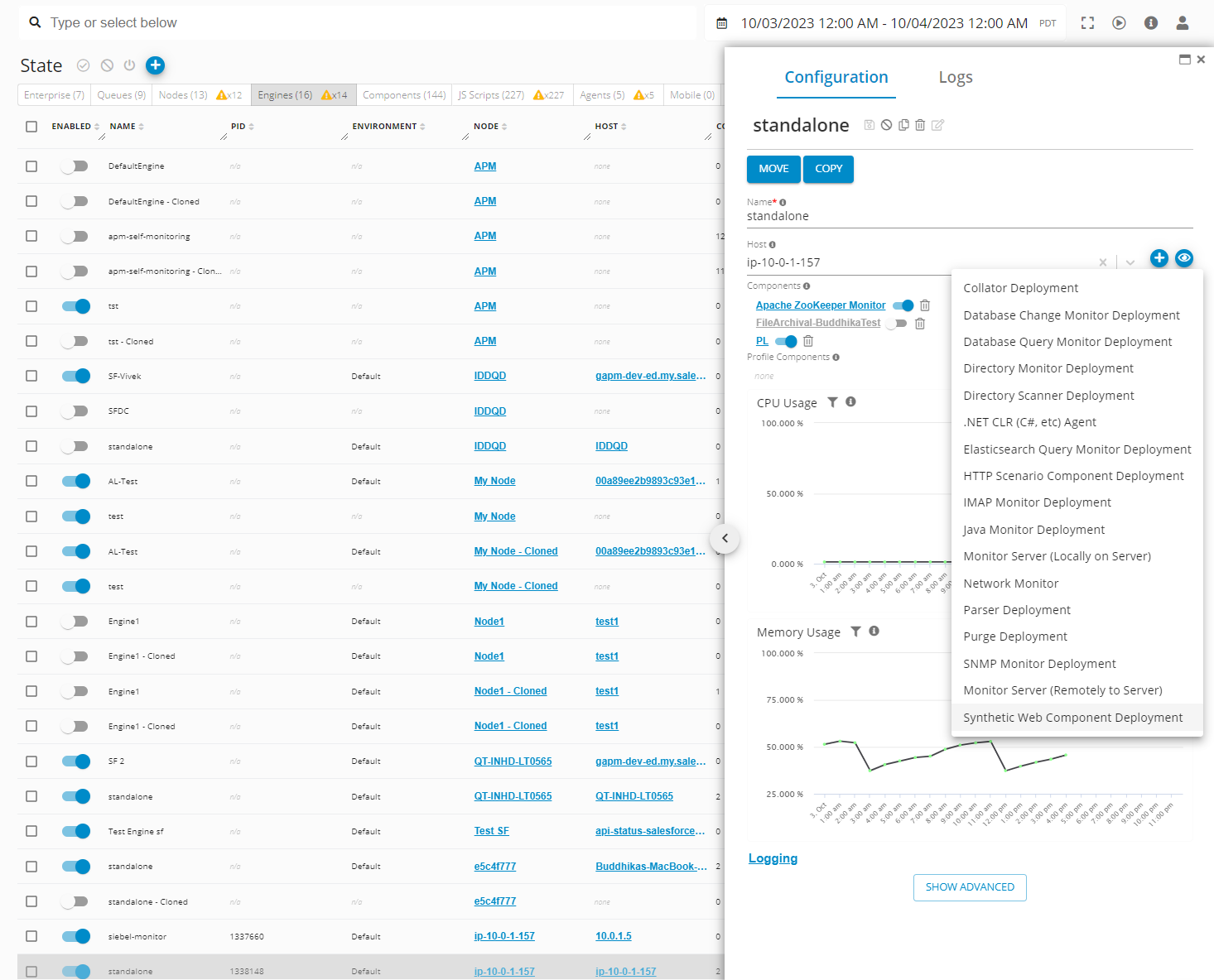
Select an Engine that:
|
Requirement |
Details |
|---|---|
|
Can reach the target application. |
Can reach the target application. |
|
Has the required browser and compatible WebDriver. |
Has the required browser and compatible WebDriver. |
|
Has the necessary network and application permissions. |
Has the necessary network and application permissions. |
|
Has sufficient capacity to run the configured schedule. |
Has sufficient capacity to run the configured schedule. |
|
Runs from the geographic or network location you want to test. |
Runs from the geographic or network location you want to test. |
Multiple components can run on the same Engine when capacity permits. Separate Engines can be used to test availability and performance from different locations or networks.
💡 Deploy at Scale with a Profile
Profiles can standardize the deployment of synthetic scenarios across many applications, environments, Monitoring Nodes, or Engines.
A profile-based deployment is appropriate when you need to:
|
When to use |
Details |
|---|---|
|
Apply the same scenario to many applications.
|
Apply the same scenario to many applications.
|
|
Maintain common browser and runtime settings. |
Maintain common browser and runtime settings. |
|
Standardize schedules and SLA thresholds. |
Standardize schedules and SLA thresholds. |
|
Update deployments centrally. |
Update deployments centrally. |
|
Manage large numbers of synthetic components consistently. |
Manage large numbers of synthetic components consistently. |
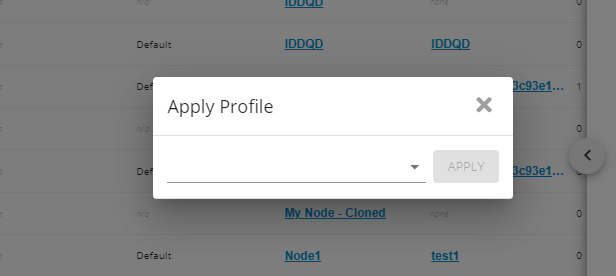
For assistance designing or deploying profile-based synthetic monitoring at scale, contact GermainUX.
✅ Validate the Deployment
After deployment:
-
Run the scenario manually.
-
Confirm that the selected Engine executes it.
-
Verify that the scenario reaches the target application.
-
Review its duration, steps, screenshots, video, and errors.
-
Confirm that SLA evaluation and alerts work as expected.
-
Enable or retain the recurring schedule after successful validation.
ℹ️ Get Help
GermainUX can help determine which automation capabilities are most appropriate for your organization and configure them for you.. Contact GermainUX Support.
Component: RPA Bot
Feature Availability: 2014.1 or later