
GermainUX can execute HTTP or HTTPS requests manually, on a schedule, or through an automated trigger.
📄 Requests can be configured as:
|
Type |
Description |
|---|---|
|
HTTP Action |
A single HTTP or HTTPS request. |
|
HTTP Scenario |
A sequence of related requests representing an API, service, or business transaction. |
🚀 Configure an HTTP Action
Use an HTTP Action when GermainUX needs to execute one request against an endpoint.
➡️ Go to:
GermainUX Workspace -> Left Menu → Settings → Wizards -> HTTP Action
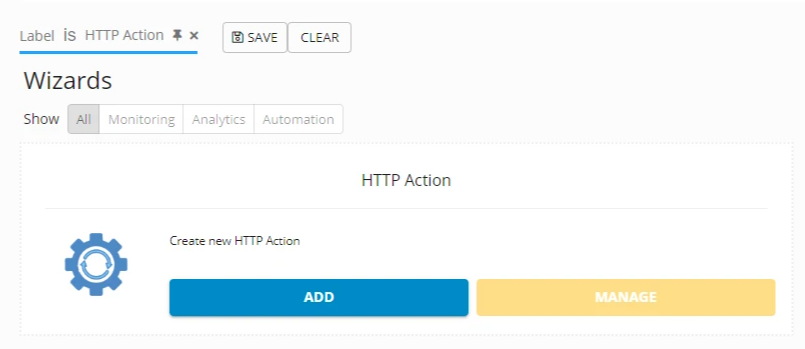
Configure the action, including:
|
Setting |
|---|
|
Action name |
|
URL and protocol |
|
HTTP method |
|
Headers |
|
Query parameters |
|
Request body, when applicable |
|
Authentication or credential reference |
|
Timeout |
|
Expected response or success criteria |
|
Monitoring Node and Engine |
|
Manual, scheduled, or event-driven execution |
Save and deploy the action when the configuration is complete.
📁 Configure an HTTP Scenario
Use an HTTP Scenario when the workflow requires multiple requests—for example, authentication followed by one or more API transactions.
➡️ Go to:
GermainUX Workspace -> Left Menu → Settings -> Wizards -> HTTP Scenario
Configure:
|
Item |
|---|
|
The scenario name and target application. |
|
The Monitoring Node and Engine. |
|
Each HTTP or HTTPS request in its execution order. |
|
Authentication and credential references. |
|
Values that must be passed between requests. |
|
Response validations and failure conditions. |
|
Optional SLA thresholds. |
|
The execution schedule. |
Save and deploy the scenario after testing its requests and dependencies.
📅 Schedule Execution
An HTTP Action or Scenario can run:
|
Mode |
|---|
|
Manually |
|
At a specific time |
|
At a recurring interval |
|
In response to an SLA, rule, insight, or automation condition |
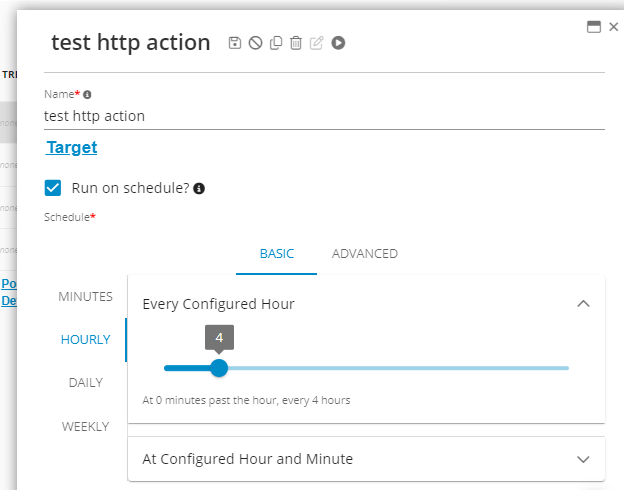
See Configure a Time Interval.
Select an Engine that can reach the target endpoint from the network location you want to test.
🔔 Configure Execution Notifications
Use the following options to receive status notifications:
|
Option |
Behavior |
|---|---|
|
Notify on Success |
Sends a notification when the HTTP Action or Scenario completes successfully. |
|
Notify on Failure |
Sends a notification when the execution fails or does not meet its configured success criteria. |
Enable both options during initial testing. In production, enable the notifications required by your operational policies.
✅ Validate the Configuration
Before enabling recurring execution:
|
Step |
Action |
|---|---|
|
1 |
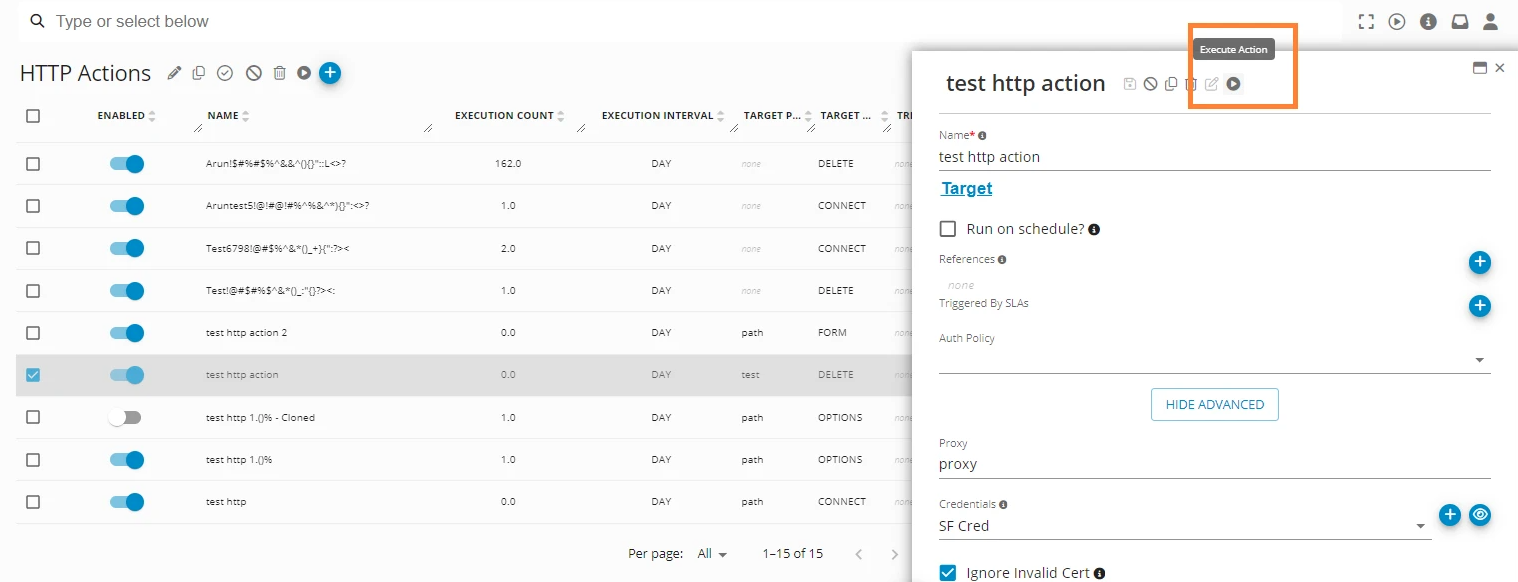
Run the action or scenario manually. |
|
2 |
Confirm that the selected Engine can reach the endpoint. |
|
3 |
Verify authentication and credentials. |
|
4 |
Review the response status, content, and duration. |
|
5 |
Confirm that sensitive values are not exposed in logs or notifications. |
|
6 |
Force a controlled failure and verify Notify on Failure. |
|
7 |
Confirm that SLA evaluation and scheduling work as expected.
|
ℹ️ Get Help
The Germain Team can help you set this up. Contact GermainUX Support.
Component: Engine
Feature Availability: 2014.1 or later