
⚙️ ServiceNow Integration
GermainUX alerts can automatically create incidents in ServiceNow, helping teams route detected issues into their existing incident-management workflows.
🔗 Integration Overview
GermainUX integrates with ServiceNow through HTTP Actions and the ServiceNow Table API. The API supports creating, reading, updating, and deleting records in ServiceNow tables.
For example, when a GermainUX SLA is breached, an HTTP Action can send a POST request that creates a ServiceNow incident containing details about the affected KPI, system, and threshold.
📃 Example ServiceNow API Request
The following request creates an incident through the ServiceNow Table API:
curl "https://<SERVICENOW_INSTANCE>.servicenow.com/api/now/table/incident" \
  --request POST \
  --header "Accept: application/json" \
  --header "Content-Type: application/json" \
  --data '{
    "short_description": "GermainUX detected CPU utilization of 91%, which exceeds the expected threshold.",
    "description": "CPU utilization is higher than the configured threshold.",
    "assignment_group": "<ASSIGNMENT_GROUP_SYS_ID>",
    "urgency": "2",
    "impact": "2"
  }' \
  --user "<SERVICENOW_USERNAME>:<SERVICENOW_PASSWORD>"
Do not include production credentials directly in scripts or configuration content. Store them in an approved credential configuration and reference them from the action.
🤖 Automatically Create ServiceNow Incidents
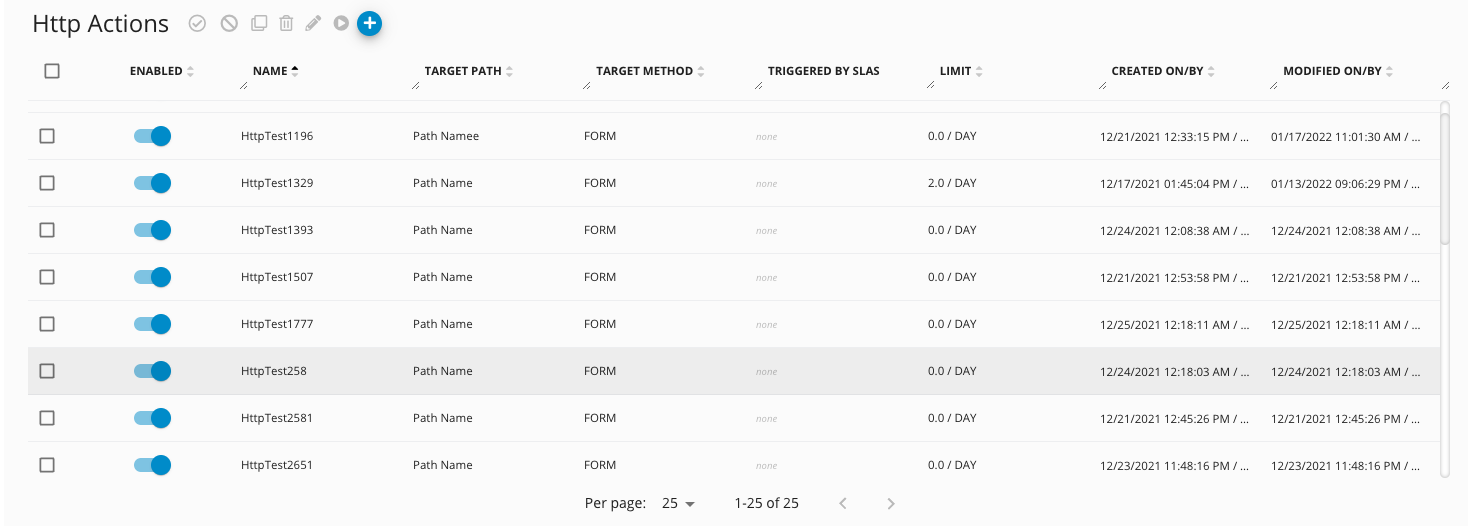
Go to GermainUX Workspace > Automation > HTTP.
This screen displays the available HTTP Actions and identifies those associated with SLAs. Select an existing action to edit it, or click + to open the HTTP Action wizard.
1️⃣ Step 1: Configure the Action
Enter:
|
Field |
Value |
|---|---|
|
Name |
|
|
Execution Count |
|
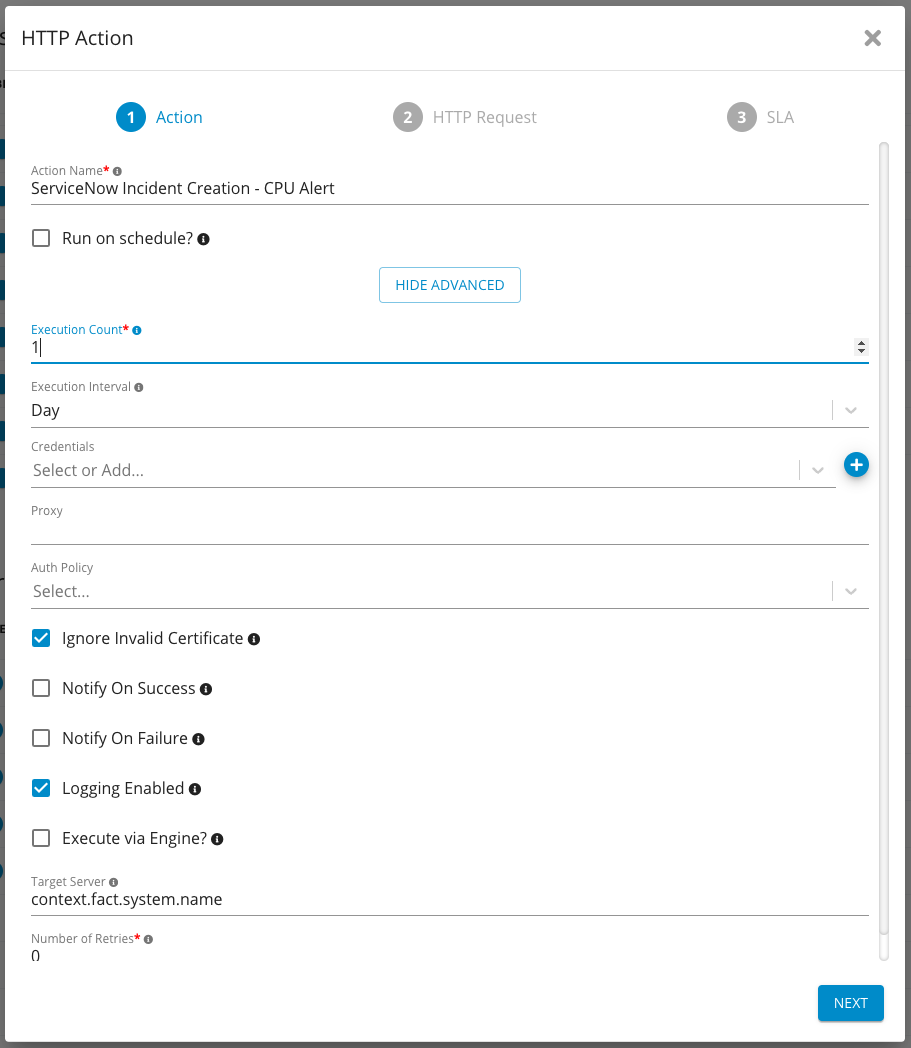
Click Next.
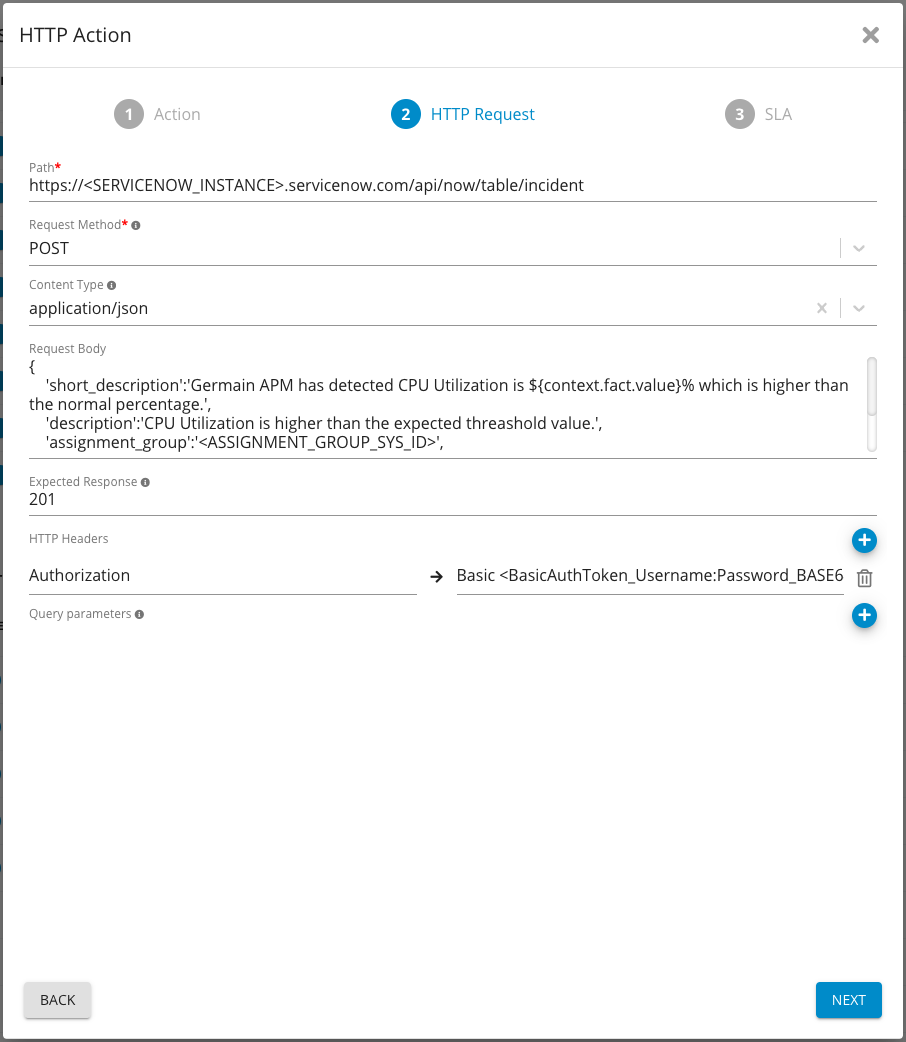
2️⃣ Step 2: Configure the HTTP Request
|
Field |
Value |
|---|---|
|
Path |
|
|
Request Method |
|
|
Content Type |
|
|
Expected Response |
|
|
Authorization |
|
Use the following request body:
{
  "short_description": "GermainUX detected CPU utilization of ${context.fact.value}%, which exceeds the expected threshold.",
  "description": "CPU utilization is higher than the configured threshold.",
  "assignment_group": "<ASSIGNMENT_GROUP_SYS_ID>",
  "urgency": "2",
  "impact": "2"
}
3️⃣ Step 3: Select the Trigger
Select the CPU Usage SLA that should trigger the HTTP Action.
When the SLA is breached, GermainUX will submit the request and create a ServiceNow incident.
Click Finish to save the configuration.
💡 Recommended Practices
|
Practice |
|---|
|
Use a dedicated ServiceNow integration account with the minimum required permissions. |
|
Store authentication details in GermainUX credential references. |
|
Apply an execution limit or quiet period to prevent duplicate incidents. |
|
Include the affected system, KPI, SLA, current value, and Analysis Dashboard link in the incident. |
|
Test the integration against a non-production ServiceNow instance before enabling it in production. |
|
Verify that ServiceNow returns HTTP status |
The same approach can be extended to update, resolve, or enrich existing ServiceNow incidents.
ℹ️ Get Help
The Germain Team can help you set this up. Contact GermainUX Support.
Component: Engine
Feature Availability: 2020.2 or later