
🔗 Integrate GermainUX Alerts with Moogsoft
GermainUX can send real-time alerts and events to Moogsoft APEX AIOps Incident Management through an HTTP Action.
The integration helps operations teams detect, correlate, prioritize, and resolve issues by sending GermainUX SLA violations and other monitored conditions directly to Moogsoft.
🔔 Events can be sent:
|
Trigger |
|---|
|
When an SLA is breached |
|
When a synthetic scenario fails |
|
When a critical error or anomaly is detected |
|
On a configured schedule |
|
Through a manual execution |
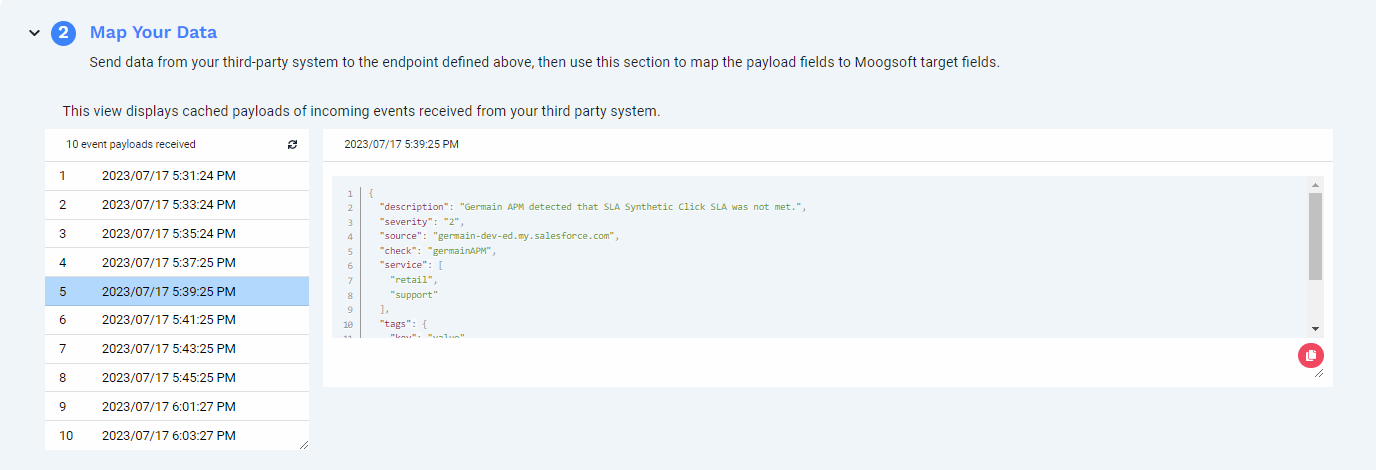
⚙️ Create a Custom Integration in Moogsoft
If a custom inbound integration does not already exist:
-
Sign in to Moogsoft APEX AIOps Incident Management.
-
Go to Integrations > Inbound Integrations > Create Your Own Integration.
-
Select Add New Integration.
-
Enter a unique integration name and optional description.
-
Select Events as the data type.
-
Save the integration.
-
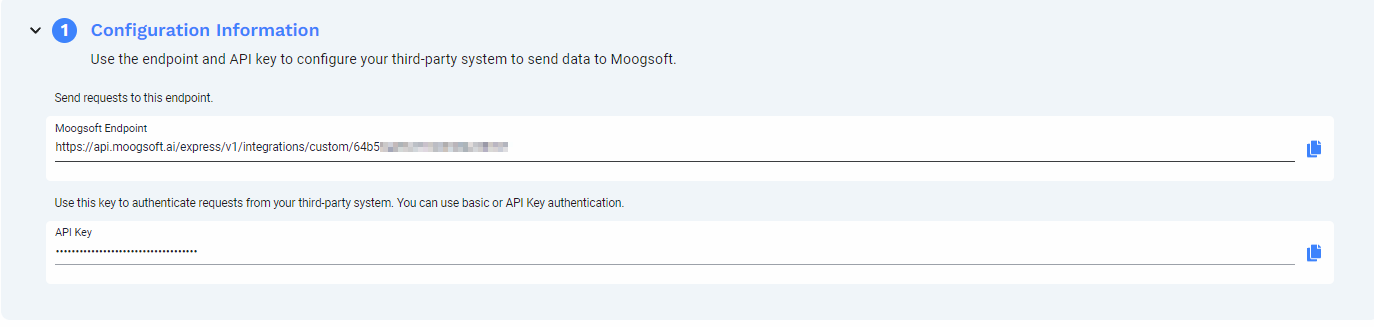
Copy the generated endpoint and obtain an API key.
-
Configure the required event-field mappings and severity mappings.
-
Validate and enable the integration.
Moogsoft generates the custom endpoint for the integration. Use the exact endpoint and authentication method displayed in its Configuration Information section rather than constructing the URL manually.
See Create Your Own Integration and Define a Custom Integration.
📦 Create the GermainUX HTTP Action
Go to:
GermainUX Workspace > Automation > HTTP
Select the Add icon to open the HTTP Action wizard.

1️⃣ Step 1: Configure the Action
Enter the action settings:
|
Field |
Example |
|---|---|
|
Name |
|
|
Execution Count |
|
Select Next.
2️⃣ Step 2: Configure the HTTP Request
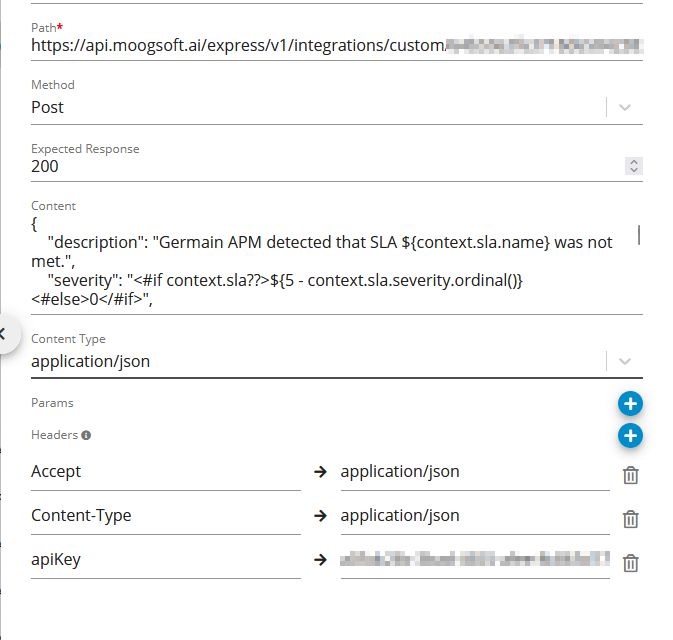
|
Field |
Value |
|---|---|
|
Path |
Custom integration endpoint generated by Moogsoft |
|
Request Method |
|
|
Content Type |
|
|
Expected Response |
Successful status returned by the configured Moogsoft endpoint, typically a |
|
Authentication |
API key configured according to the Moogsoft integration instructions |
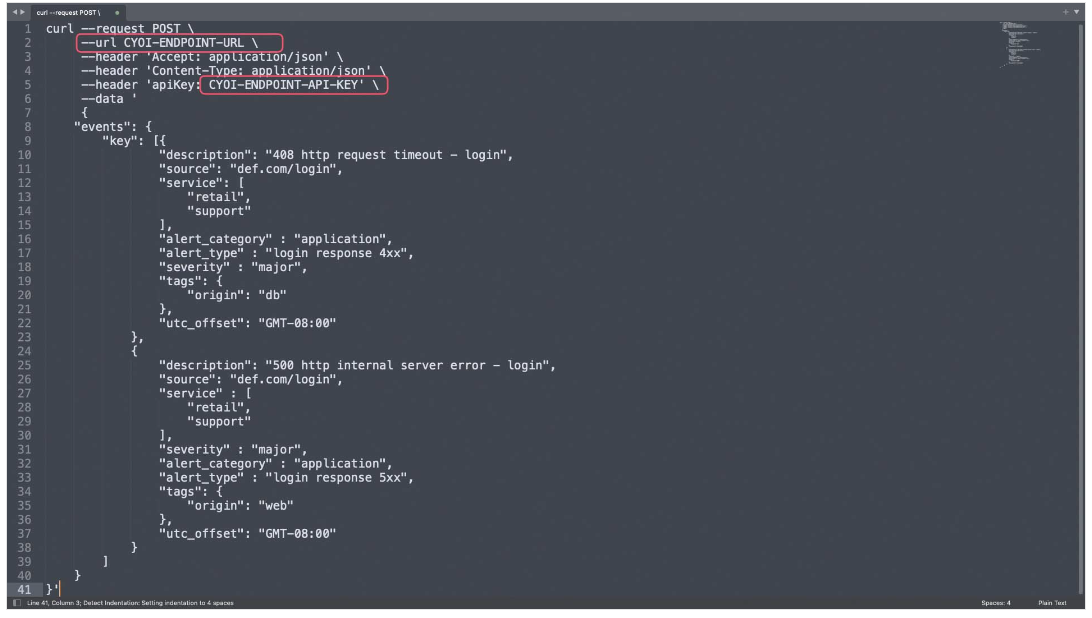
📃 Example Request Body
{
  "description": "GermainUX detected that SLA ${context.sla.name} was not met.",
  "severity": "<#if context.sla??>${5 - context.sla.severity.ordinal()}<#else>0</#if>",
  "source": "${context.fact.system.hostname}",
  "check": "GermainUX",
  "service": [
    "retail",
    "support"
  ],
  "tags": {
    "origin": "GermainUX"
  }
}
Adapt the payload and severity mapping to the fields configured in your Moogsoft custom integration.
📤 Example Headers
Accept: application/json
Content-Type: application/json
apiKey: <MOOGSOFT_API_KEY>
Use the authentication format provided by Moogsoft for the specific integration. Moogsoft custom integrations support API-key-based authentication, including supported basic or bearer-token configurations.
Store the API key in a protected GermainUX credential reference. Do not embed a production key directly in the action body, documentation, or exported configuration.
3️⃣ Step 3: Assign the Trigger
Configure when GermainUX should send the event.
For example, to create a Moogsoft event when a synthetic scenario fails:
-
Select the synthetic-scenario KPI.
-
Configure or select its failure SLA.
-
Add the Moogsoft HTTP Action as the SLA Action.
-
Save the SLA and action configuration.
The same HTTP Action can be associated with other SLAs or automation conditions.
4️⃣ Step 4: Finish and Test
-
Complete the wizard.
-
Run the HTTP Action manually.
-
Confirm that GermainUX receives a successful HTTP response.
-
Open the Moogsoft custom integration.
-
Confirm that the test payload appears in Map Your Data.
-
Map the incoming fields to the appropriate Moogsoft event fields.
-
Validate and enable the integration.
-
Force a controlled GermainUX SLA breach and confirm that a new Moogsoft event is created.
📋 Recommended Event Fields
|
GermainUX context |
Moogsoft field |
|---|---|
|
SLA or error description |
|
|
GermainUX severity or priority |
|
|
Hostname, application, or monitored system |
|
|
KPI, SLA, or check name |
|
|
Application or business service |
|
|
Environment, session, user impact, or dashboard link |
|
Include enough context for Moogsoft users to understand the issue and open the relevant GermainUX Analysis view.
🛡️ Security and Operational Considerations
|
Consideration |
|---|
|
Store the Moogsoft API key as a protected credential. |
|
Restrict access to users authorized to modify the HTTP Action. |
|
Use HTTPS only. |
|
Avoid sending unnecessary personal or sensitive data. |
|
Configure retries and execution limits carefully. |
|
Prevent duplicate incidents through Moogsoft deduplication and GermainUX Quiet Time. |
|
Test severity mappings before production use. |
|
Monitor failed HTTP executions and API-key expiration. |
ℹ️ Get Help
The Germain Team can help you set this up. Contact GermainUX Support.
Component: Engine
Feature Availability: 2014.1 or later