
🗑️ Configure Automatic File Deletion and Purging
GermainUX can automatically delete files that exceed a configured age. This is commonly used to prevent application and log directories from consuming excessive disk space.
Purged files are deleted from the monitored server and may not be recoverable. Validate the directory, file-age threshold, permissions, and schedule in a nonproduction environment before enabling automatic deletion.
🚀 Deploy a Purge Monitor
1️⃣ Step 1: Open the Deployment Wizard
-
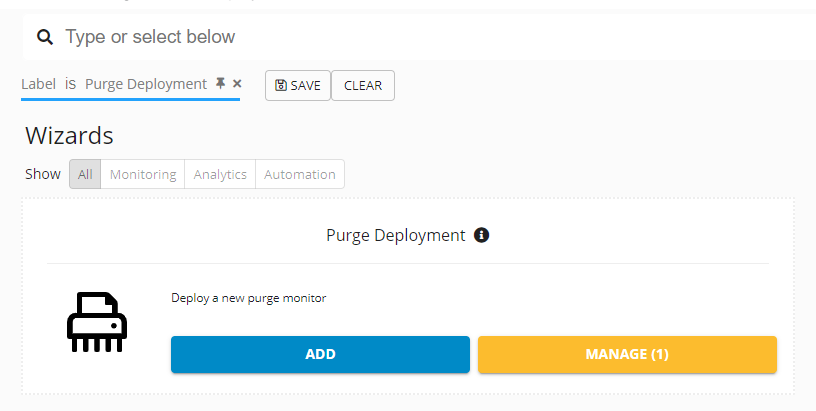
Go to GermainUX Workspace -> Left Menu → Settings → Wizards -> Purge Monitor Deployment.
-
Select Add.
📌 Step 2: Configure the Purge Target
Enter the following information:
|
Field |
Description |
|---|---|
|
Component Type |
Purge-monitor type appropriate for the application. For Oracle Siebel CRM logs, select Siebel Log Purge Monitor. |
|
Directory |
Directory containing the files to purge. |
|
Interval |
Minimum file age, in seconds, before a file becomes eligible for deletion. |
|
Monitored Server |
Server on which the target directory and files are located. |
Select Next.
⚙️ Step 3: Configure the Deployment
|
Field |
Description |
|---|---|
|
Monitor Name |
Unique name identifying the purge monitor—for example, |
|
Monitoring Node |
Engine Manager or Monitoring Node running on the server that hosts the files. |
|
Engine |
GermainUX Engine that will execute the purge. |
|
Schedule |
Frequency and time at which GermainUX evaluates and deletes eligible files. |
Select Finish, then Close.
✅ Verify the Deployment
After deployment:
-
Go to GermainUX Workspace -> Left Menu → Settings -> Germain -> State.
-
Select the configured Monitoring Node.
-
Select the Engine.
-
Locate the deployed purge component.
-
Confirm that it is enabled and running.
-
Review its configuration in the right-side Details panel.
Run the purge against a controlled test directory before enabling it for production files.
🧭 Review or Update the Configuration
Purge-monitor settings can be reviewed from either GermainUX Workspace or the Configuration Console.
🌐 GermainUX Workspace
Go to:
Germain -> State -> [Monitoring Node] -> [Engine] -> [Purge Component]
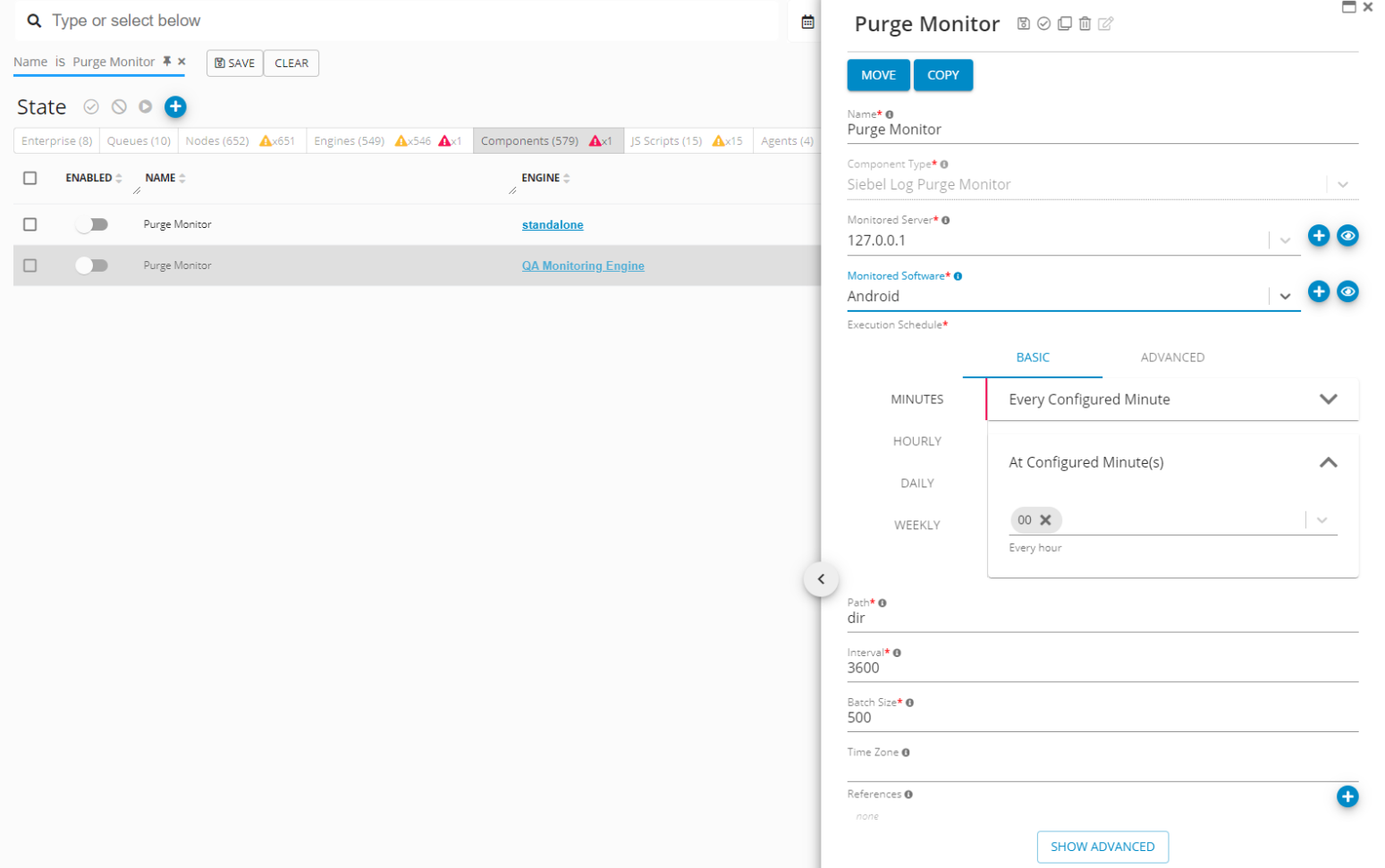
The component settings appear in the right-side Details panel.
🔗 Configuration Console
Open:
https://GERMAIN_INSTANCE/germainapm/config
Navigate through the monitoring configuration to the applicable Monitoring Node, Engine, and purge component.
In an Oracle Siebel CRM environment, there should typically be a corresponding monitoring configuration for each Siebel server on which a purge component has been deployed.
 Safety Checklist
Before enabling a recurring purge:
|
Check |
Details |
|---|---|
|
Confirm directory |
Confirm that the configured directory is exact and not broader than intended. |
|
File-age units |
Confirm that the file-age threshold uses seconds. |
|
Schedule conflicts |
Verify that the schedule will not overlap with log processing, backups, or application maintenance. |
|
Engine permissions |
Ensure that the Engine account can delete only the intended files. |
|
Log retention |
Confirm that required logs have already been archived or retained according to policy. |
|
Test deletions |
Test with files that can be safely deleted. |
|
Post-change verification |
Verify the component after any directory, server, Engine, or schedule change. |
|
Compliance review |
Review applicable audit, security, legal, and retention requirements. |
If files must be retained, use file archiving before deletion.
ℹ️ Get Help
The Germain Team can help you set this up. Contact GermainUX Support.
Component: Engine
Feature Availability: 2014.1 or later