
⚙️ How GermainUX Works
🔍 Overview
GermainUX combines monitoring, analytics, AI, and automation to continuously understand and improve user experience, business workflows, application behavior, and technology performance.
The platform follows a continuous operational model:
Observe → Analyze → Prioritize → Act → Validate
You can start with a single application or use case and expand GermainUX as your requirements grow.
👀 1. Observe
GermainUX collects the data required for your use case from sources such as:
|
Source |
|---|
|
Adoption |
|
APIs and services |
|
Application code |
|
Browser applications |
|
Business processes |
|
Cloud services |
|
Conversion |
|
Databases |
|
Logs and files |
|
Mobile applications |
|
Native Windows applications |
|
Networks |
|
Servers and operating systems |
|
Third-party platforms |
|
User sessions |
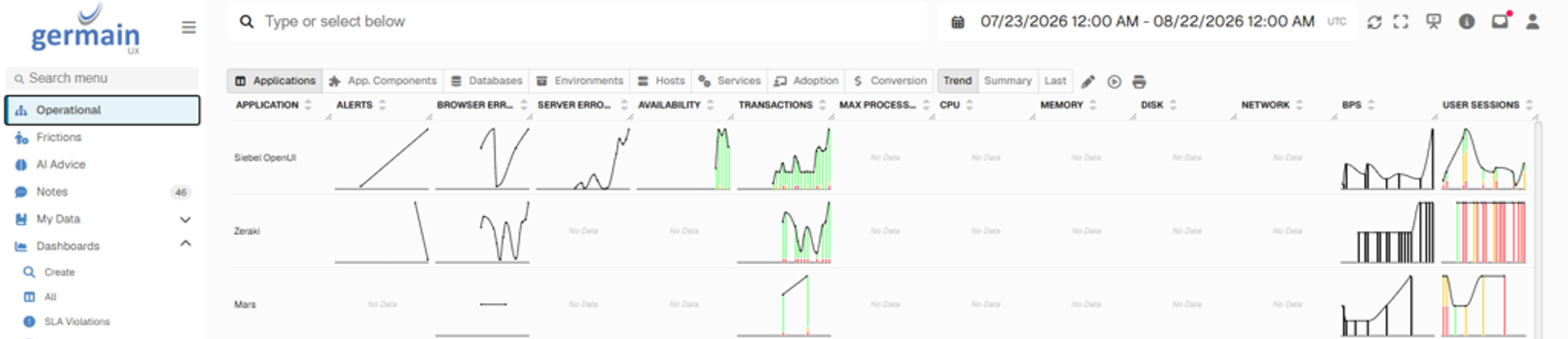
Only the GermainUX components required for your monitoring and automation use cases need to be deployed.
📊 2. Analyze
GermainUX Enterprise continuously processes and correlates collected data.
Analytics can identify:
|
Insight |
|---|
|
Friction |
|
Errors |
|
Performance degradation |
|
Conversion issues |
|
Adoption barriers |
|
Productivity loss |
|
Process inefficiencies |
|
Anomalies |
|
Trends |
|
Relationships |
|
Root causes |
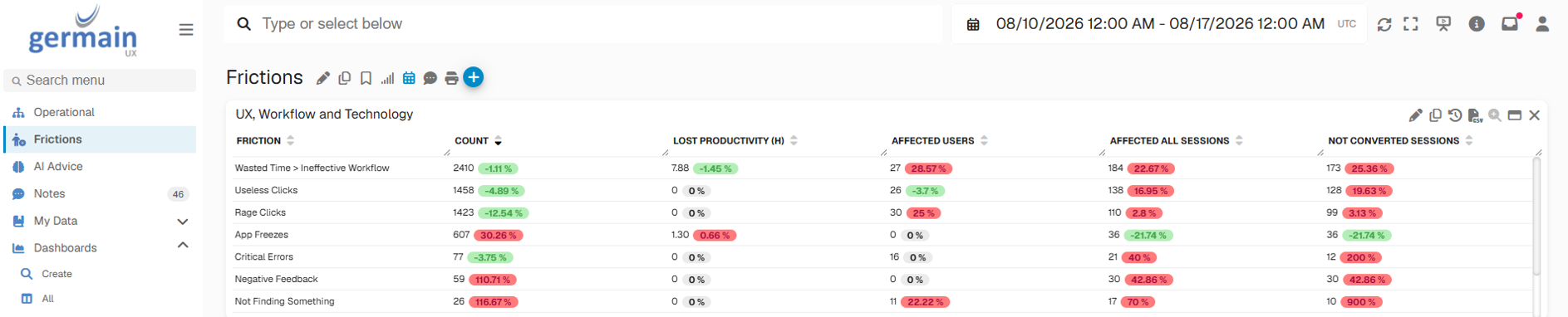
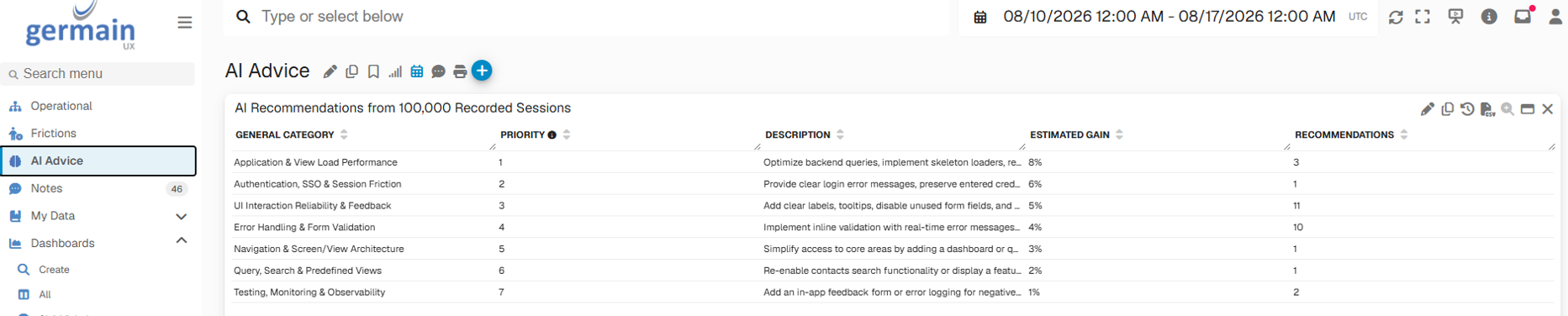
AI can further summarize, categorize, explain, and analyze relevant data.
Insights are available through real-time dashboards and can also be delivered through reports, email, Slack, Microsoft Teams, WhatsApp, SMS, and other supported channels.
🎯 3. Prioritize
GermainUX connects technical and experience signals with their operational and business impact.
Instead of prioritizing solely by technical severity, teams can consider:
|
Consideration |
|---|
|
How frequent and how many users are affected |
|
Which workflows are affected |
|
Converted or not |
|
Friction count |
|
Productivity Loss |
|
Technical severity |
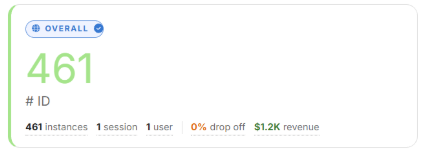
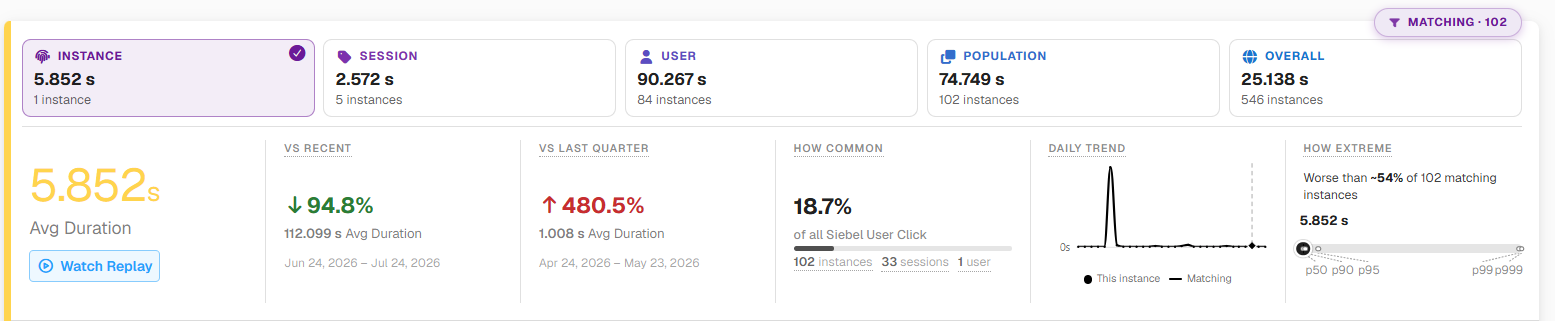
This helps teams focus on the issues and improvements that matter most.
🏃 4. Act
GermainUX Automation can turn detected conditions and analytical findings into actions.
Depending on the use case, GermainUX can:
|
Action |
|---|
|
Notify a team |
|
Send a report |
|
Create or update a ticket |
|
Call an API |
|
Execute a script |
|
Execute SQL |
|
Run an RPA workflow |
|
Execute a synthetic transaction |
|
Perform an approved remediation action |
This enables an agentic approach where GermainUX can help move continuously from observation and analysis to action. Learn more about supported actions.
✅ 5. Validate
Monitoring continues after an action, release, configuration change, or remediation.
Teams can validate whether:
|
Validation |
|---|
|
The issue stopped occurring |
|
Performance improved |
|
User friction decreased |
|
Conversion improved |
|
Adoption improved |
|
Productivity improved |
|
A business process returned to expected behavior |
This closes the loop between detection and improvement.
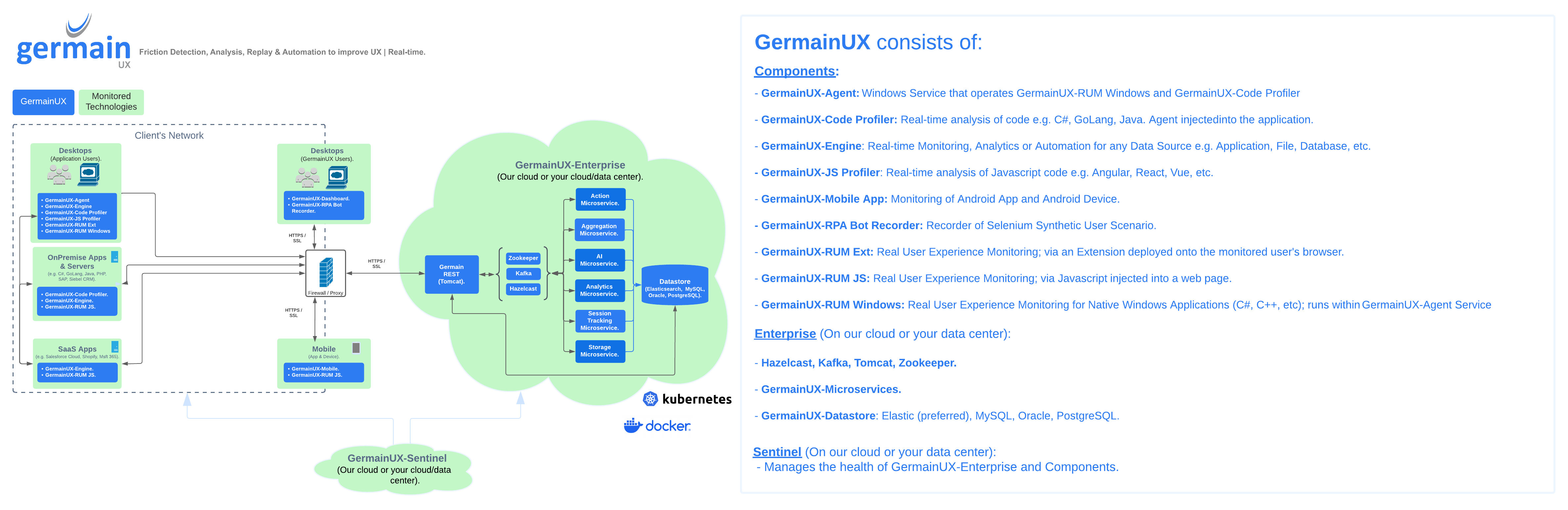
🏗️ Architecture
GermainUX consists of three primary layers:
|
Layer |
Purpose |
|---|---|
|
Monitoring & Execution Components |
Monitor users, applications, code, workflows, infrastructure, and technologies or execute automated transactions |
|
GermainUX Enterprise |
Processes, correlates, analyzes, stores, presents, and acts on collected data |
|
GermainUX Sentinel |
Continuously monitors the health of GermainUX itself |
Germain Workspace provides the central interface for analytics, dashboards, Session Replay, AI, automation, configuration, and administration.
☁️ Cloud, On-Premise or Hybrid
GermainUX Enterprise can be deployed:
|
Deployment Option |
|---|
|
In GermainUX Cloud |
|
In your Data Center |
|
In your Cloud Account |
Monitoring components can be deployed close to the systems they monitor, allowing hybrid architectures where required.
Choose the architecture based on:
|
Factor |
|---|
|
Security |
|
Compliance |
|
Data residency |
|
Network access |
|
Performance |
|
Infrastructure standards |
|
Cost |
Explore Deployment Options and Compliance.
📥 Complements Your Existing Platforms
GermainUX can operate alongside existing monitoring, analytics, automation, and digital-experience platforms.
Data can be brought into GermainUX for correlation and analysis, and GermainUX findings or actions can be sent to other systems.
This makes it possible to fill specific gaps without replacing platforms that already work well for your organization.
Explore Integrations.
🔧 Customized Around Your Goals
Start by telling the Germain Team what you want to improve:
|
Goal |
|---|
|
Conversion |
|
Application adoption |
|
Employee productivity |
|
User experience |
|
Business-process performance |
|
Application reliability |
|
Resolution time |
|
Operational efficiency |
The Germain Team can then help determine:
-
Your current gaps
-
What to monitor
-
Which components to deploy
-
Which KPIs matter
-
Which dashboards and analytics are required
-
Which alerts are useful
-
Which automations should be configured
-
Etc
The Germain Team can configure and customize GermainUX around your requirements at no additional cost.
The more context you provide about your goals, applications, workflows, and existing platforms, the more precisely GermainUX can be configured around them.